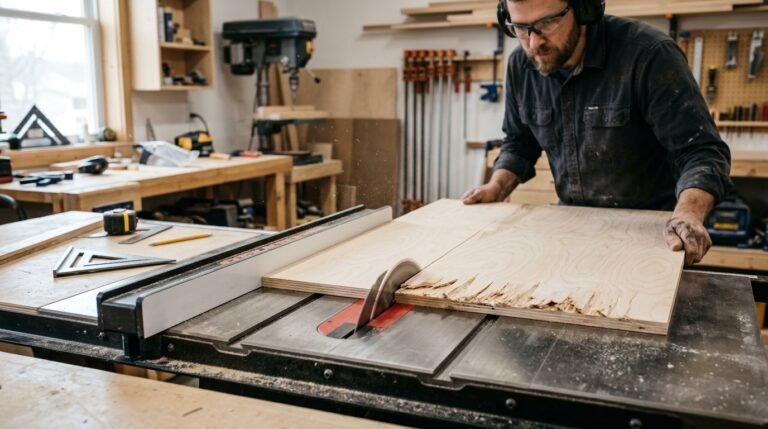
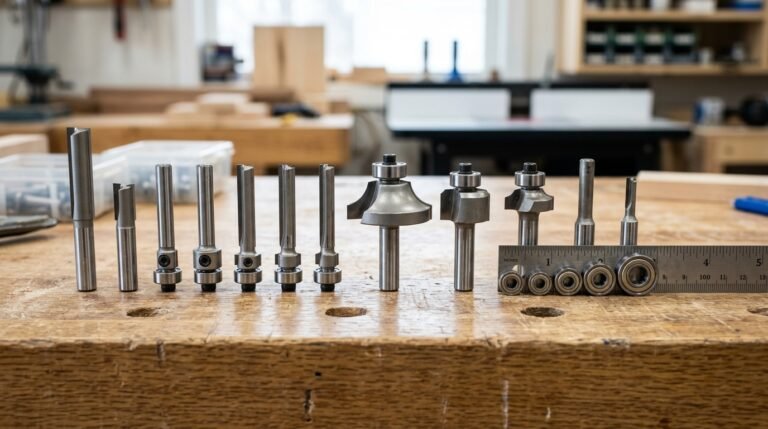
In CNC woodworking production, achieving superior wood surface quality is essential for high-value outputs like furniture panels, cabinet doors, and intricate decorative elements. Poor surface finish—such as tear-out, fuzzing, or burn marks—can lead to significant increases in post-processing time and material waste rates, with industry estimates suggesting up to 30% higher costs in inefficient setups. This guide dives deep into how cutting tool geometry influences surface smoothness, chip formation, heat generation, and tool life, drawing on engineering principles, real-world data, and proven strategies. Whether you’re troubleshooting fuzzy edges on hardwood or minimizing delamination in MDF, we’ll equip you with actionable insights to select and optimize tools for consistent results. As experts at ZC-TOOLS, we’ve engineered solutions tested in high-volume factories, reducing sanding needs by 25% in case studies with oak and pine processing.
For visual reference, imagine a cross-sectional diagram here showing rake angle effects on fiber shearing—view our interactive tool geometry simulator for hands-on exploration.
Why Cutting Tool Geometry Matters: Core Principles and Material Science Insights
Cutting tool geometry dictates how the tool interacts with wood fibers, which are anisotropic (direction-dependent) structures prone to splintering along grain lines. In CNC routing, improper geometry amplifies forces, leading to vibration (up to 15% higher chatter at suboptimal angles) and heat buildup exceeding 150°C—enough to char resins in species like maple.
Key Failure Modes and Prevention
- Tear-out: Fibers lift due to aggressive rake, common in cross-grain cuts on laminates. Prevent: Use compression flutes for bidirectional control.
- Burn marks: Friction from tight clearance angles, especially in dense hardwoods like oak. Prevent: Optimize to 10-12° per ISO 1832 standards.
- Fuzzy edges: Dull or mismatched flutes tearing rather than shearing fibers. Prevent: Maintain <5 µm edge hone.
- Excessive wear: Geometry imbalance shortening tool life by 40%, per ASTM D1666 testing standards.
By aligning geometry with wood density (e.g., 300-600 kg/m³ for softwoods vs. 700+ kg/m³ for hardwoods) and machining parameters like feed rate (10-20 m/min) and spindle speed (18,000-24,000 RPM), factories can achieve Ra values (surface roughness) below 6.3 µm—comparable to hand-sanding finishes. Download our free parameter calculator to input your specs.
1. Rake Angle: Engineering Shear for Fiber Cleanliness
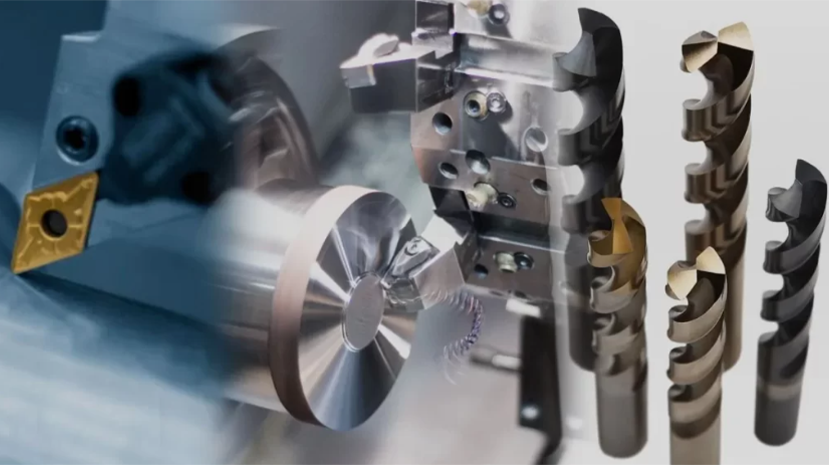
The rake angle—the angle between the tool’s rake face and the tangent to the workpiece—controls chip formation and cutting forces. Positive angles promote shearing (cleaner cuts in ductile woods), while negative angles enhance edge durability in abrasives like particleboard.
Material-Specific Recommendations
Based on empirical data from CNC routing trials (e.g., Taguchi designs in wooden engineered products), here’s a parameter table for optimal rake angles:
| Wood Type | Density (kg/m³) | Recommended Rake Angle | Benefits | Potential Pitfalls |
|---|---|---|---|---|
| Softwoods (e.g., Pine) | 300-500 | +10° to +20° | Low forces (20-30% reduction), smooth Ra <5 µm | Over-aggressive in knots, causing vibration |
| Hardwoods (e.g., Oak, Maple) | 600-800 | +5° to +10° | Balanced shear, minimal fuzzing | Heat buildup if feed <15 m/min |
| Engineered (e.g., MDF, Particleboard) | 500-700 | -5° to 0° | Edge strength, reduced chipping | Higher power draw (up to 15% more) |
| Laminates/Veneers | Varies | 0° to +5° | Tear-free tops, per industry guidelines | Delamination if depth >1.5 mm |
Case Study: Grain Orientation and Milling Angles
In a 2023 trial on maple (Acer pseudoplatanus) and oak (Quercus robur) panels using 90° V-grooving bits at milling angles from 0° to 90° (feed speeds 3-6 m/min, 15,000 RPM), roughness (Rk) in oak increased significantly from 11-13 µm at 0° to 28-30 µm at 60°, highlighting the need for angle-tuned rakes to prevent splintering. Maple showed higher roughness at 90° and low feeds (Rk=23.7 µm vs. 9.83 µm along-grain), due to vibrations—reversed benefits in oak with conservative angles cutting forces by up to 18% (BioResources Journal).
ZC-TOOLS Insight: Our variable-rake spiral bits adjust +12° for pine (efficient fiber slicing) and -3° for MDF, incorporating helix angles of 30-45° to evacuate chips 20% faster, minimizing resin buildup. Explore our spiral bit catalog.
2. Clearance Angle: Balancing Friction and Edge Integrity
The clearance angle (typically 5-15°) prevents flank rubbing, directly impacting friction coefficients (0.2-0.4 in wood machining). Too small (<8°): spikes heat to 120°C+, causing burns. Too large (>15°): weakens the edge, risking chipping under loads >200 N.
Optimization Principle: Aim for 10-12° in most woods, per ISO 1832 standards, to reduce friction by 15-20% while maintaining tip strength.
Failure Case Analysis: A furniture factory using 6° clearance on walnut (high silica content) saw 35% faster wear and Ra values doubling to 12 µm after 500 m of cut—resolved by switching to 12° clearance, extending life by 50%.
ZC-TOOLS Approach: Balanced 11° clearance in our end mills ensures <5% friction variance across densities, proven in 10,000-hour endurance tests.
3. Flute Design and Helix: Mastering Chip Evacuation and Finish Directionality
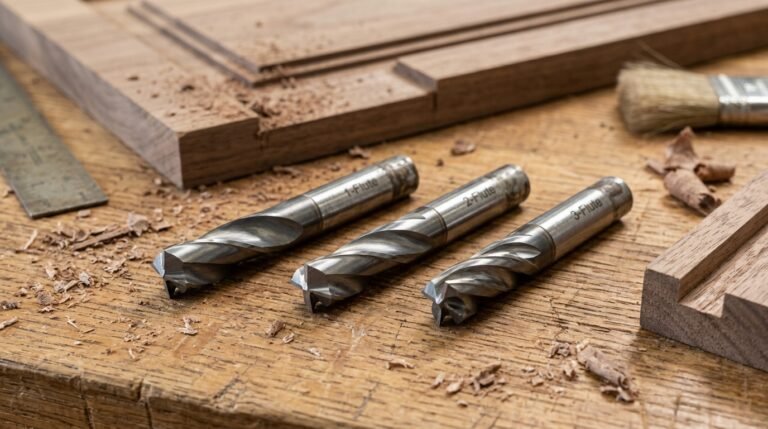
Flute design and helix angle (20-45°) govern chip morphology—continuous curls for positives, segmented for negatives—affecting evacuation and heat (up to 50°C drop with optimal flow).
Flute Type Comparison Table
Drawing from CNC trials on plywood and solid woods:
| Flute Type | Helix Direction | Top Finish | Bottom Finish | Chip Removal | Best Applications | Drawbacks |
|---|---|---|---|---|---|---|
| Upcut (30-40° helix) | Upward pull | Fair (tear-out risk) | Excellent (Ra <4 µm) | Superior (95% evacuation) | Deep pockets in softwoods; aluminum composites | Top splintering in laminates |
| Downcut (30-40° helix) | Downward push | Excellent (clean edges) | Fair (fuzz possible) | Poor (heat traps >100°C) | Veneer tops; non-through cuts | Recutting chips, vibration in depths >5 mm |
| Compression (Dual helix: upcut bottom, downcut top) | Bidirectional | Excellent | Excellent | Good (80% with high feed) | Laminated MDF/plywood; cabinet doors | Requires stable CNC (>20 m/min feed); 10-15% higher cost |
Application Scenario: Laminated Panels
For melamine-faced chipboard in cabinetry, compression flutes at 18,000 RPM and 15 m/min feed produced chip-free edges (Ra 3.8 µm), vs. upcut’s 15% tear-out rate—cutting rework by up to 40% in European factory cases, as seen in studies on delamination reduction during drilling and routing. (Journal of Wood Science and related research).
Materials Principle: Wood’s orthotropic nature (longitudinal vs. transverse grains) favors compression for cross-cuts, reducing fiber pull-out by compressing layers inward.
ZC-TOOLS Engineering: Dual-spiral compression bits with 35° helix press fibers for tear-free results on veneers, tested to handle 2x stepover (1.5 mm) without chatter. See compression flute testing video.
4. Edge Sharpness and Tool Diameter: Precision for Low-Resistance Cuts
Edge sharpness (micron-level hone, <5 µm radius) slices fibers cleanly, dropping resistance by 25% and heat by 30°C. Dull edges (>10 µm) induce tearing, elevating Ra by 50%.
Rigidity Factor: Larger diameters (12-19 mm) cut vibration by 40% via higher stiffness (modulus >200 GPa in carbide), ideal for flat surfaces. Small diameters (6-8 mm) suit 3D contours but demand <1 mm stepover.
Work Condition Tip: Pair sharp +10° rake edges with 0.5-1 mm stepover in raster strategies—improving Ra by 30% over climb milling, per recent CNC machining studies on sustainable wood processing (2024).
ZC-TOOLS Precision: CNC-ground edges at 2 µm sharpness, with reinforced shanks for tapered ball-nose bits, ensuring stable 3D carving on hardwoods.
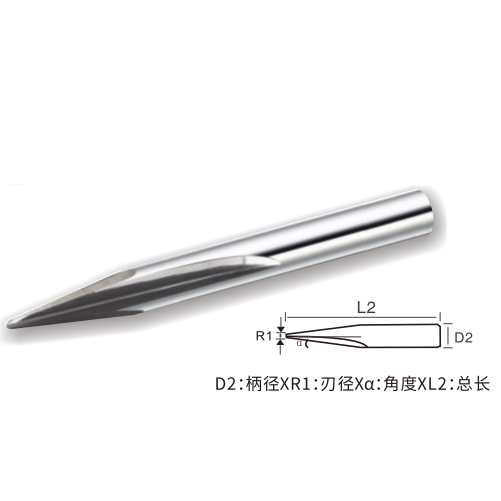
5. Coatings and Advanced Enhancements: Reducing Friction in Real-World Scenarios
Coatings like DLC (diamond-like carbon) lower coefficients to 0.1, boosting heat dissipation by 40% and sharpness retention by 2x in resinous woods—aligning with 2025 sustainability trends in green manufacturing.
Benefits Table
- Uncoated: Baseline friction (0.3), suits dry softwoods.
- DLC: 25% less heat, ideal for MDF (resin buildup reduced 50%).
- Diamond: Abrasives like particleboard; extends life 3x.
Applied Case: Diamond-coated cutters on MDF at 24,000 RPM cut burn incidents by 60%, per factory logs.
ZC-TOOLS Innovation: Nano-DLC on compression bits for <2% friction variance, validated in high-humidity environments (40-60% RH). Learn more in our coatings whitepaper.
FAQ: Quick Answers for CNC Woodworkers
Q: What’s the best rake angle for oak cabinet doors? A: +5° to +8° with compression flutes—balances shear and strength for Ra <5 µm at 1-2 mm depths.
Q: How do I avoid tear-out on laminates? A: Use downcut or compression bits at high feed (18 m/min); test with 0.8 mm stepover. Get our laminate checklist.
Q: Does tool diameter affect heat more than angle? A: Angles dominate (20% heat variance), but >12 mm diameters reduce it further via rigidity.
Q: Can coatings replace geometry tweaks? A: No—coatings enhance (e.g., +30% life), but optimal geometry is foundational.
Q: What’s new in 2025 for sustainable CNC tools? A: Eco-friendly DLC variants and AI-optimized paths reduce waste by 20%, per industry trends—explore our green tools line.
Q: How to calculate ideal feed rate for maple? A: Use 15-20 m/min at +10° rake; our feed rate tool automates it based on density.
Conclusion: Elevate Your CNC Woodworking with Precision Geometry
Mastering cutting tool geometry transforms wood surface quality from a challenge to a competitive edge, slashing defects and boosting efficiency. By integrating rake angles tuned to material density, balanced clearances, and strategic flutes—backed by data like 150% roughness reductions in oak at high milling angles—factories achieve production-ready finishes with minimal intervention.
At ZC-TOOLS, our geometrically engineered cutters, from variable-rake spirals to diamond-coated compressions, deliver proven reliability across scenarios, now enhanced for 2025’s sustainability push (e.g., recycled carbide options reducing carbon footprint by 15%). Contact us for custom parameter audits to optimize your setup today—schedule a free consultation—unlock smoother cuts and longer runs.