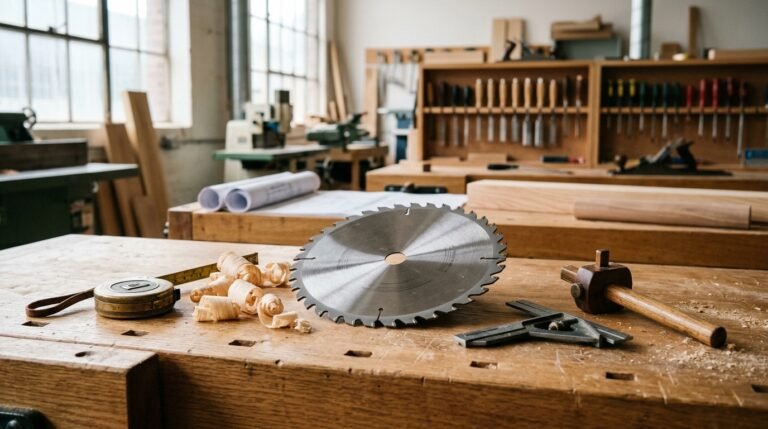
Over 60% of beginner woodworkers abandon their first project halfway through — and the most common reason isn’t lack of skill, it’s using the wrong cutting tool for the job. The right set of woodworking cutting tools for beginners doesn’t need to be expensive or extensive; it needs to be intentional. This guide breaks down exactly which cutting tools deserve a spot in your shop, what each one actually does well, and how to avoid the $200+ mistakes that come from buying tools you don’t need yet.
What Makes a Cutting Tool Essential for Beginner Woodworkers
Not every cutting tool deserves a spot on your workbench. When evaluating woodworking cutting tools for beginners, four criteria separate the essentials from the clutter: versatility, ease of use, affordability, and safety. A tool that only handles one specific task — say, cutting dovetail joints — isn’t where you should spend your first $50.
Versatility matters most. A tool that crosscuts, rip-cuts, and trims will earn its place ten times over before a specialty tool even leaves the drawer. Right behind that is ease of use — if a tool demands 20 hours of practice before you can make a straight cut, it’s going to collect dust. The editors at Wood Magazine consistently recommend starting with tools that offer immediate, tangible results because early wins keep beginners motivated.
Then there’s budget. A quality Japanese pull saw runs about $25–$35, while a decent circular saw sits around $60–$100. Those price points are realistic for someone testing the waters. Safety rounds out the list — tools with predictable behavior, minimal kickback risk, and straightforward blade guards should always rank higher than raw cutting speed.
These four filters will guide every recommendation in this article. For a broader look at how cutting tools fit into the full woodworking ecosystem, check out this complete guide to woodworking cutting tools.
Hand Saws vs Power Saws — Which Should a Beginner Start With
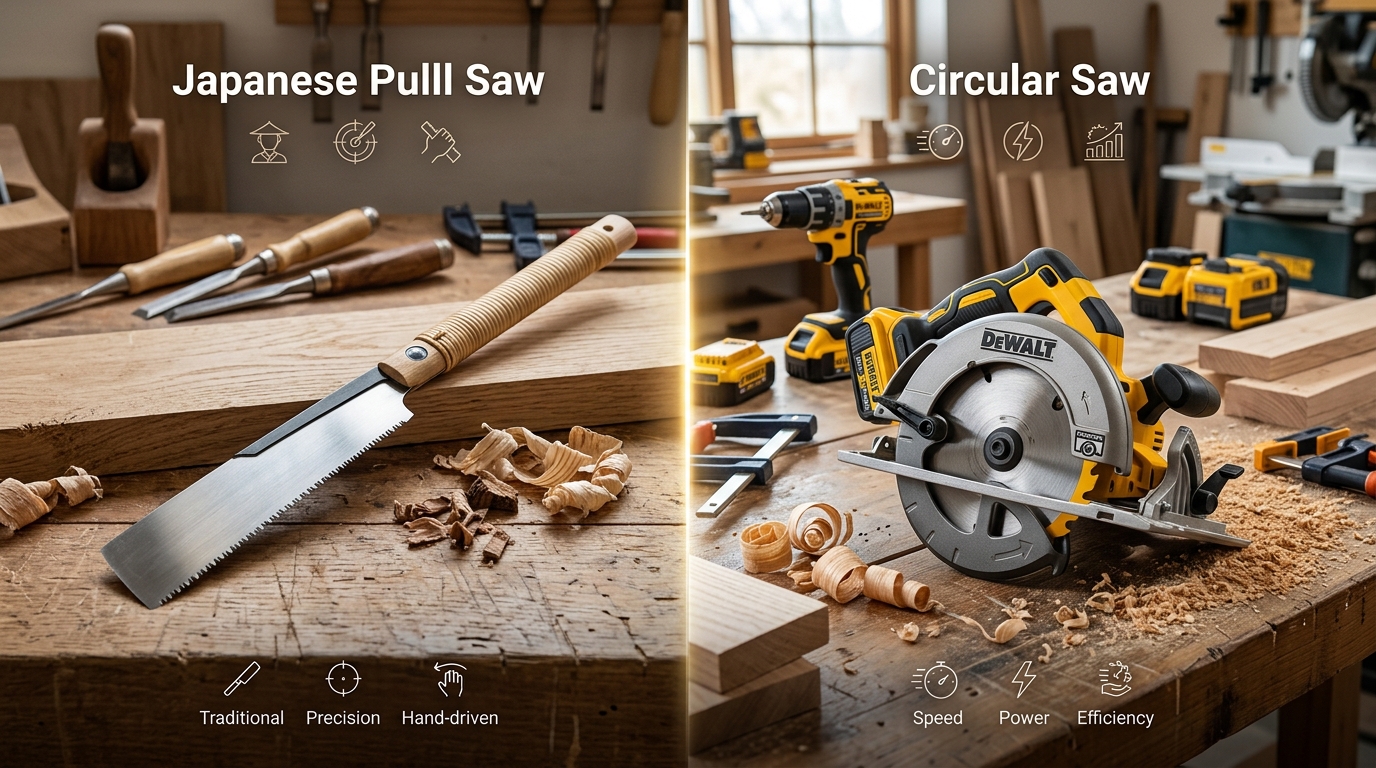
Hand saws cost between $20 and $60 for a quality model. A decent circular saw starts around $80, and a miter saw runs $150 or more. That price gap matters when you’re still figuring out whether woodworking is your thing or a passing weekend impulse.
But cost isn’t the real argument here. Hand saws teach you to read the grain, feel resistance, and develop the muscle memory that prevents costly mistakes later with power tools. According to Fine Woodworking, many seasoned craftspeople recommend hand tools first precisely because they force you to slow down and understand how wood actually behaves under a blade.
Power saws, on the other hand, shine when you need repeatable straight cuts across sheet goods or need to break down lumber quickly. They’re louder, demand more safety awareness, and leave less room for hesitation. A beginner who jumps straight to a table saw without understanding kickback risks is genuinely in danger.
The honest recommendation for most people exploring woodworking cutting tools for beginners: start with a quality crosscut hand saw and a Japanese pull saw. Build a shelf, a small box, a cutting board. Once your hands understand what a clean cut feels like, upgrading to a circular saw or jigsaw becomes far less intimidating — and far safer. For guidance on matching blades to materials when you do make that jump, check out this guide on choosing the right saw blade for wood.
The 7 Must-Have Cutting Tools for Your First Woodworking Projects
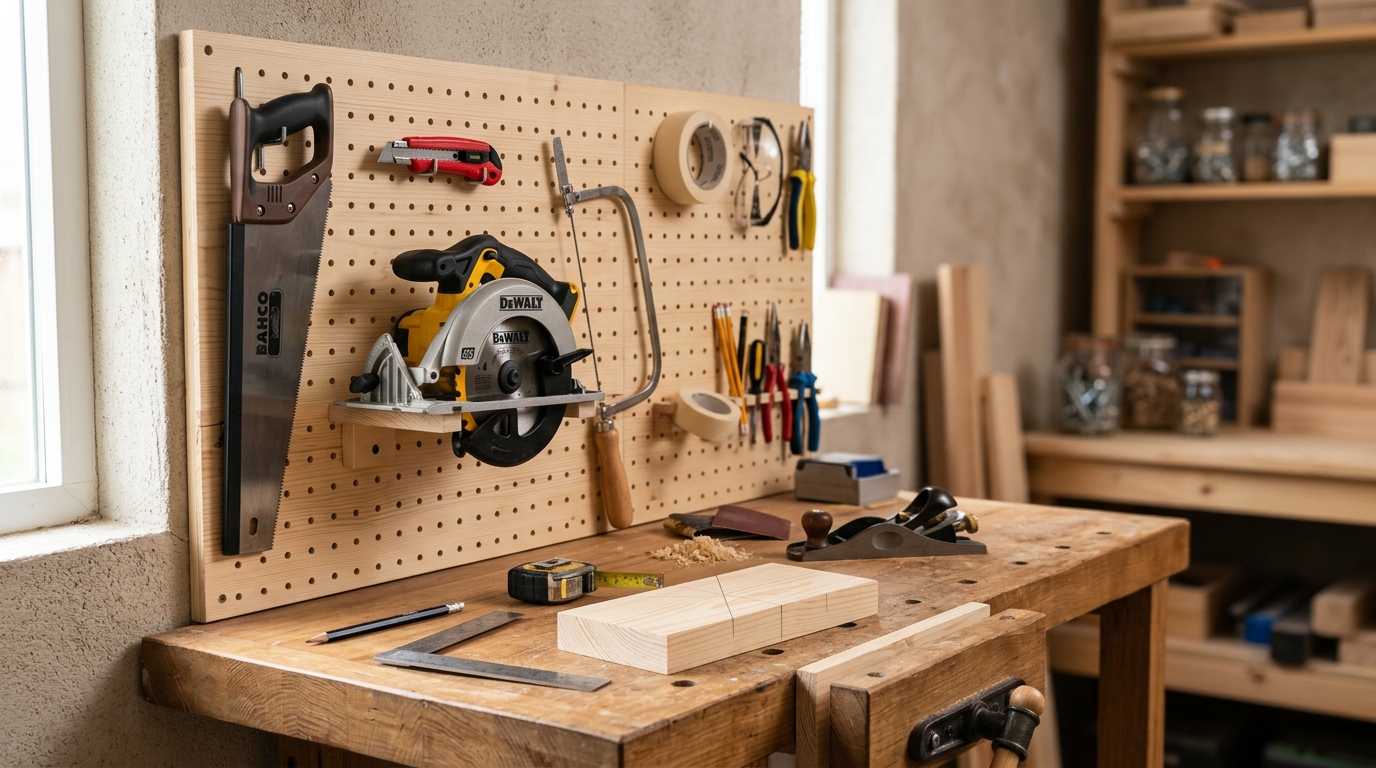
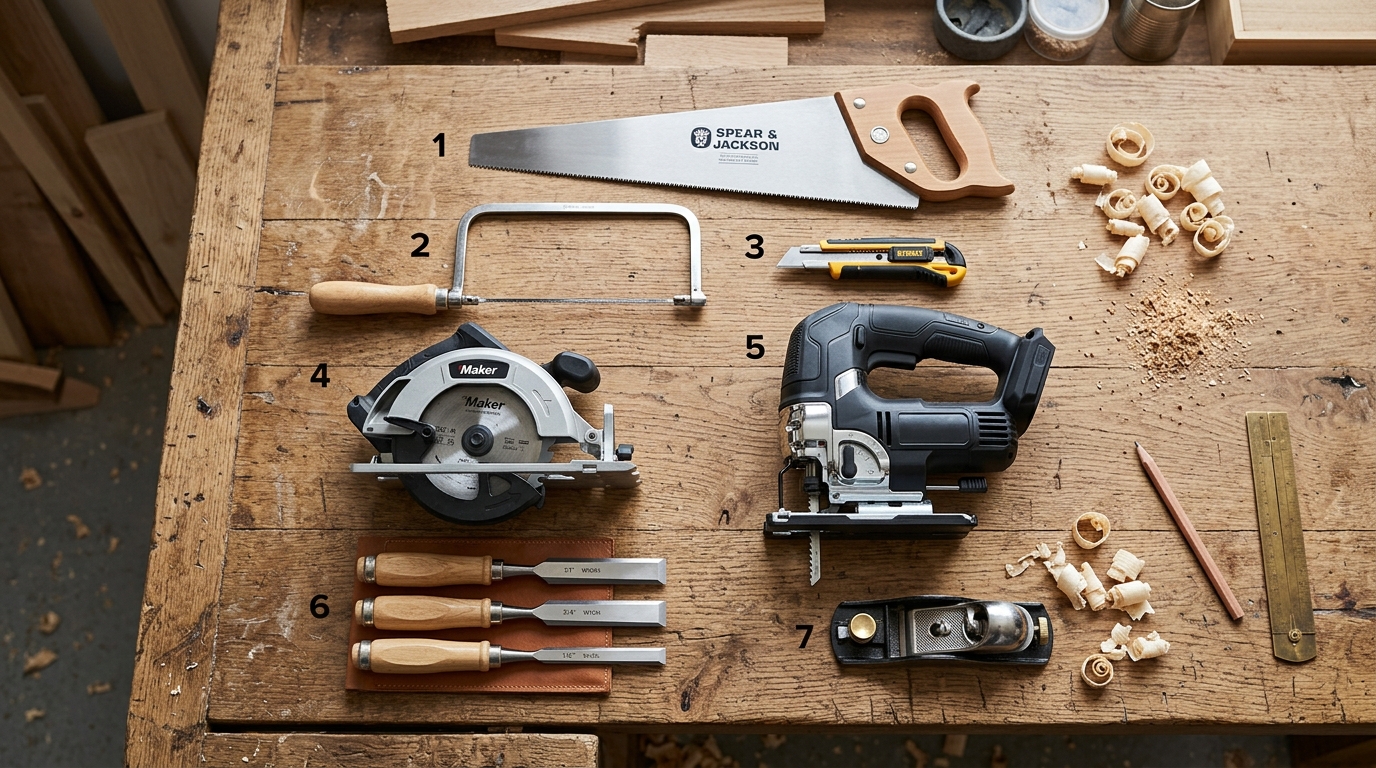
Here’s the short list. These seven woodworking cutting tools for beginners cover roughly 90% of the cuts you’ll encounter in your first year of projects — from bookshelves and picture frames to simple joinery.
- Crosscut hand saw — cuts boards to length across the grain. Look for 12-15 TPI (teeth per inch) for smooth results.
- Coping saw — handles tight curves and interior cutouts that no straight saw can manage. A $12 Olson saw works perfectly fine.
- Utility knife — scores cut lines, trims edges, and marks joinery. Retractable blade, always sharp.
- Circular saw — your first real power saw. A 7¼-inch model with a carbide-tipped blade rips plywood sheets fast and straight.
- Jigsaw — cuts curves in stock up to about 1½ inches thick. Variable speed control matters more than wattage.
- Chisels (¼”, ½”, ¾” set) — pare joints, clean up mortises, chop waste. Bevel-edge style gives the most versatility.
- Block plane — shaves end grain, eases sharp edges, and fine-tunes fit. A low-angle model (around 12° bed angle) is the most forgiving for new hands.
When buying, prioritize blade quality over brand prestige. A cheap saw with a good blade outperforms an expensive saw with a dull one every time. Fine Woodworking has tested dozens of entry-level tools and consistently finds that mid-range options ($30–$80 per tool) hit the sweet spot between durability and affordability.
Hand Cutting Tools That Build Foundational Skills
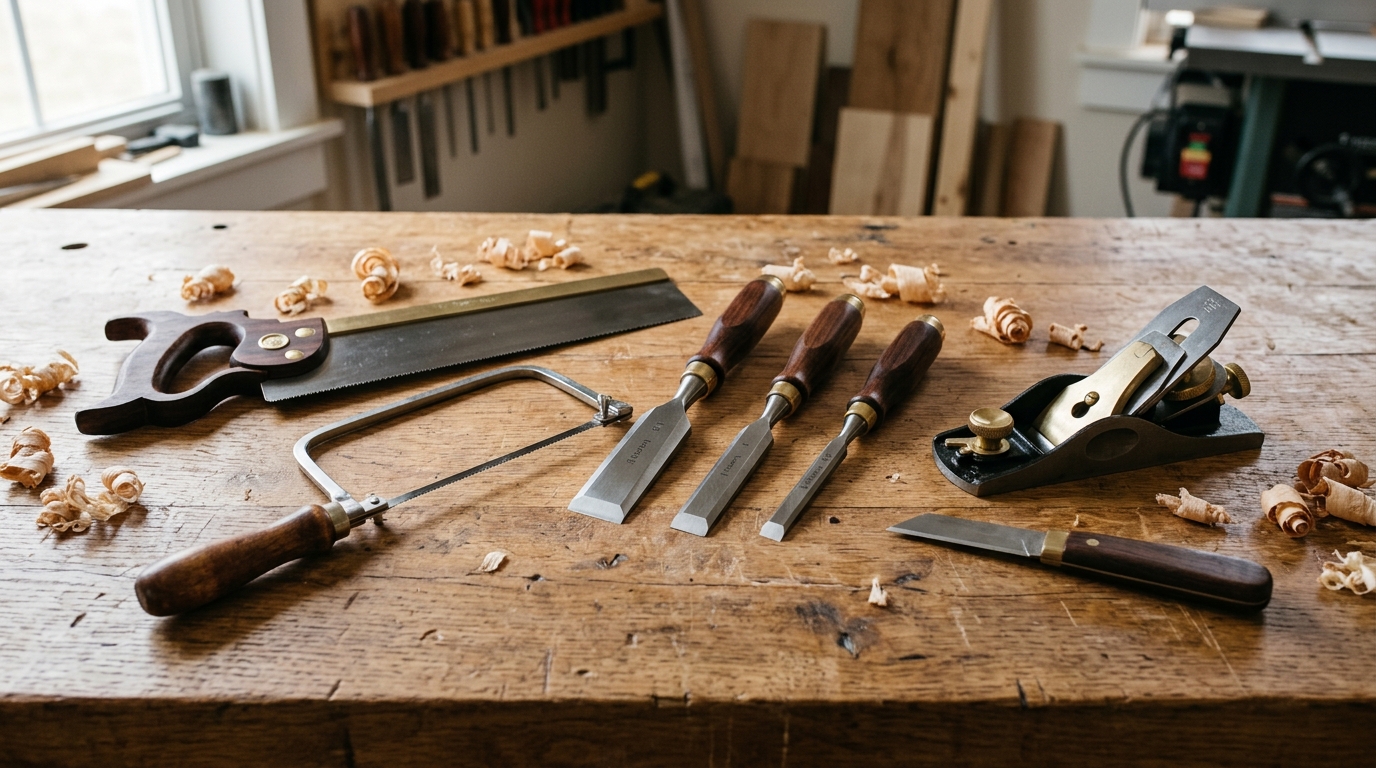
A crosscut hand saw forces you to feel the wood resist, flex, and release with every stroke. That feedback is irreplaceable. You learn grain direction through your wrists before your eyes ever catch it, and that physical intuition carries over to every tool you’ll pick up later. A 15-inch crosscut saw with 10-12 TPI handles most beginner joinery cuts cleanly.
The coping saw handles curves. Its thin, tensioned blade lets you cut interior profiles and tight radii that a straight saw simply can’t reach. Pair it with a set of three bench chisels — 1/4″, 1/2″, and 3/4″ — and you can clean up joints, pare end grain, and chop mortises by hand. Chisels teach you more about wood behavior in a single afternoon than a router teaches in a month.
A low-angle block plane shines for chamfering edges, trimming end grain, and fitting parts. Keep it sharp. A dull plane tears fibers and teaches you nothing except frustration. For layout and scoring, a sharp utility knife beats a pencil line every time — it severs wood fibers ahead of the saw, giving you cleaner results. These hand-powered woodworking cutting tools for beginners develop the muscle memory and material sensitivity described well in Popular Woodworking’s skill-building guides. For a broader overview of how these tools fit into a complete toolkit, see our complete woodworking cutting tools guide.
Power Cutting Tools That Save Time Without Sacrificing Safety
Two power tools earn their place among the best woodworking cutting tools for beginners: the circular saw and the jigsaw. The circular saw handles straight rip cuts and crosscuts through plywood, 2x4s, and dimensional lumber with speed a hand saw simply can’t match. A 7¼-inch model with an electric brake — which stops the blade within about 2 seconds of releasing the trigger — is the safest entry point. Look for a saw that includes a blade guard that retracts smoothly; a sticky guard tempts beginners to pin it back, which is genuinely dangerous.
The jigsaw fills a different role. It cuts curves, notches, and interior cutouts that a circular saw physically cannot make. Variable speed control matters here — slower speeds (around 1,000 SPM) reduce splintering on hardwood, while faster settings chew through softwood efficiently. For blade selection, T-shank blades lock in more securely than U-shank types, and carbide-tipped blades last significantly longer on dense material.
Be realistic about cut quality. A circular saw guided freehand will drift 1/16″ or more over a 4-foot cut. Clamp a straight edge as a fence — even a factory-edge piece of plywood works — and accuracy improves dramatically. The U.S. Consumer Product Safety Commission recommends always wearing safety glasses and hearing protection with power saws, advice that’s easy to ignore until it isn’t.
How to Choose the Right Blade for Different Wood Types
Tooth count is the single fastest way to predict cut quality. A 24-tooth blade rips through softwoods like pine and cedar quickly but leaves a rough edge. Bump that up to 40 or 60 teeth, and you get cleaner crosscuts on hardwoods such as oak, maple, and walnut — though the cut slows down noticeably.
Plywood demands special attention. Its thin veneer layers splinter easily, so a blade with 80 or more teeth and a narrow kerf (the width of material the blade removes) minimizes tearout. For a deeper breakdown of blade materials suited to sheet goods, check out this guide on cutting tool materials for plywood.
Blade material matters just as much as tooth count. High-speed steel (HSS) blades cost less upfront but dull fast on dense hardwoods. Carbide-tipped blades last 5 to 10 times longer and handle both softwoods and hardwoods without frequent swaps — a real advantage when you’re still building confidence with woodworking cutting tools for beginners. The editors at Wood Magazine consistently recommend carbide as the default for general-purpose shop blades.
Chisels follow a similar logic. Softwoods respond well to a 25-degree bevel because the fibers part easily. Hardwoods need a steeper 30-degree angle to prevent the edge from rolling. Keep both angles in your sharpening routine, and you won’t have to guess which profile fits the project in front of you.
Budget-Friendly Cutting Tool Kits That Actually Perform Well
Skip the 150-piece combo kits at big-box stores. Most bundle dull blades and flimsy accessories you’ll replace within weeks. A smarter approach: spend $150–$250 on a few individual woodworking cutting tools for beginners, each chosen for the cuts you’ll actually make in your first year.
Here’s where to spend more and where to hold back. Allocate roughly 40% of your budget to one solid circular saw — the DeWalt DWE575SB sits around $130 and outperforms saws twice its price. Pair it with a quality carbide-tipped blade for $18–$30, and you’ve covered 70% of beginner cutting tasks. For hand tools, a $25 Japanese-style pull saw and a $15 coping saw round out the kit without wrecking your wallet.
Where can you safely go cheap? Utility knives, marking gauges, and basic chisels under $30 perform fine for learning. The steel won’t hold an edge as long, but you’ll develop sharpening habits faster — which is actually a benefit. Save premium upgrades for after you know what your projects demand.
Common Beginner Mistakes When Using Woodworking Cutting Tools and How to Avoid Them
Forcing the blade through stock is the single most common error. Pushing too hard causes the saw to bind, scorches the wood, and wears teeth prematurely. Let the blade do the work — apply steady, light pressure and match your feed rate to the resistance you feel. If the tool bogs down, your blade is probably dull.
Dull blades cause more injuries than sharp ones. A worn edge demands extra force, which leads to slips. Check teeth every 8–10 hours of use; if you notice burn marks or fuzzy edges on cuts, swap the blade immediately. Our guide to carbide tipped saw blades explains what to look for in a quality replacement.
Ignoring grain direction ruins otherwise clean joinery. Cutting or planing against the grain lifts fibers and creates tearout that no amount of sanding fixes well. Always read the surface before you cut. Skipping layout marks is another trap — even a 1/16″ drift compounds across multiple pieces. Mark your waste side with an “X” so you cut on the correct line every time.
Safety gear gets skipped too often. The OSHA woodworking standards page reports that contact with cutting tools accounts for a large share of shop injuries. Ear protection, safety glasses, and push sticks aren’t optional — they’re the cheapest insurance you’ll ever buy. Fixing these habits early makes every set of woodworking cutting tools for beginners safer and more effective from day one.
Frequently Asked Questions About Beginner Woodworking Cutting Tools
What single cutting tool should I buy first?
A circular saw. It handles crosscuts, rip cuts, and even angled cuts with the right blade. For under $70, you get a tool that replaces three or four hand tools in terms of raw capability. Pair it with a quality carbide-tipped blade and a straightedge guide, and you can break down sheet goods, trim lumber to length, and cut joinery shoulders.
How much should I spend on a starter set?
Budget $150 to $300 total. That covers a circular saw, a Japanese pull saw, a utility knife, a coping saw, and a set of chisels. Going below $150 usually means sacrificing blade quality, which leads to frustration and unsafe cuts.
Are cheap woodworking cutting tools for beginners worth buying?
Sometimes. A $12 pull saw from a reputable brand cuts surprisingly well. But a $15 chisel set with soft steel won’t hold an edge past three cuts. Focus your money on anything with a blade edge — saws, chisels, planes — and save on accessories like clamps and squares.
How do I maintain cutting edges?
Hone chisels on a 1000/6000-grit combination waterstone every two to three hours of use. For saw blades, wipe pitch off with mineral spirits after each session. The Popular Woodworking team recommends replacing circular saw blades after roughly 10,000 linear feet of cuts rather than attempting to resharpen them at home.
When should I upgrade to intermediate tools?
When your projects outgrow your tools — not before. If you’re fighting your circular saw’s fence to get accurate miters, that’s the signal to invest in a miter saw. If freehand curves feel limiting, a bandsaw makes sense. Upgrade one tool at a time based on the specific bottleneck you’re hitting.
Building Your Cutting Tool Collection the Smart Way
Start with three tools: a circular saw, a crosscut hand saw, and a sharp utility knife. That trio handles 80% of beginner projects — shelves, boxes, simple frames. Spend your first month just making straight cuts and learning to read grain direction before adding anything else.
Month two or three, pick up a jigsaw for curves. By month six, a miter saw makes sense if you’re building furniture or trim work. Let your projects dictate purchases, not the other way around. A router can wait until you actually need edge profiles or dadoes.
Budget roughly $250–$350 for that initial three-tool setup with decent blades. Allocate another $50 toward sharpening supplies — a diamond plate and a strop will keep hand tools performing for years. When you’re ready to upgrade blades, carbide-tipped saw blades dramatically improve cut quality on every power tool you own.
One practical rule: never buy a tool you can’t name a specific project for. The Fine Woodworking community echoes this constantly — restraint builds skill faster than gear does. Woodworking cutting tools for beginners don’t need to fill an entire wall. They need to fill your hands with confidence, one project at a time.