In woodworking projects, choosing the right drill bit for wood is a crucial detail that can determine the quality of the finished piece. Many people focus their attention on selecting materials and designing, yet often overlook the importance of the drilling process.
In fact, a drill bit is not just a tool for making holes—it directly affects the precision of your work, the structural stability, and the overall appearance.
If the drill bit is not suitable, it can easily cause wood to chip, crack, or even result in wasted expensive material due to misaligned drilling.
Therefore, understanding the characteristics of different drill bits and matching them to the wood’s hardness and specific application is an essential lesson for any advancing woodworker. Only by using the right tool can you achieve precise and clean holes.

Common Types of Drill Bits for Wood
When working on woodworking projects, there are many types of drill bits available, each designed for a specific purpose.
Here are some of the most common Drill Bit for Wood types and when to use them:
1. Brad Point Bit
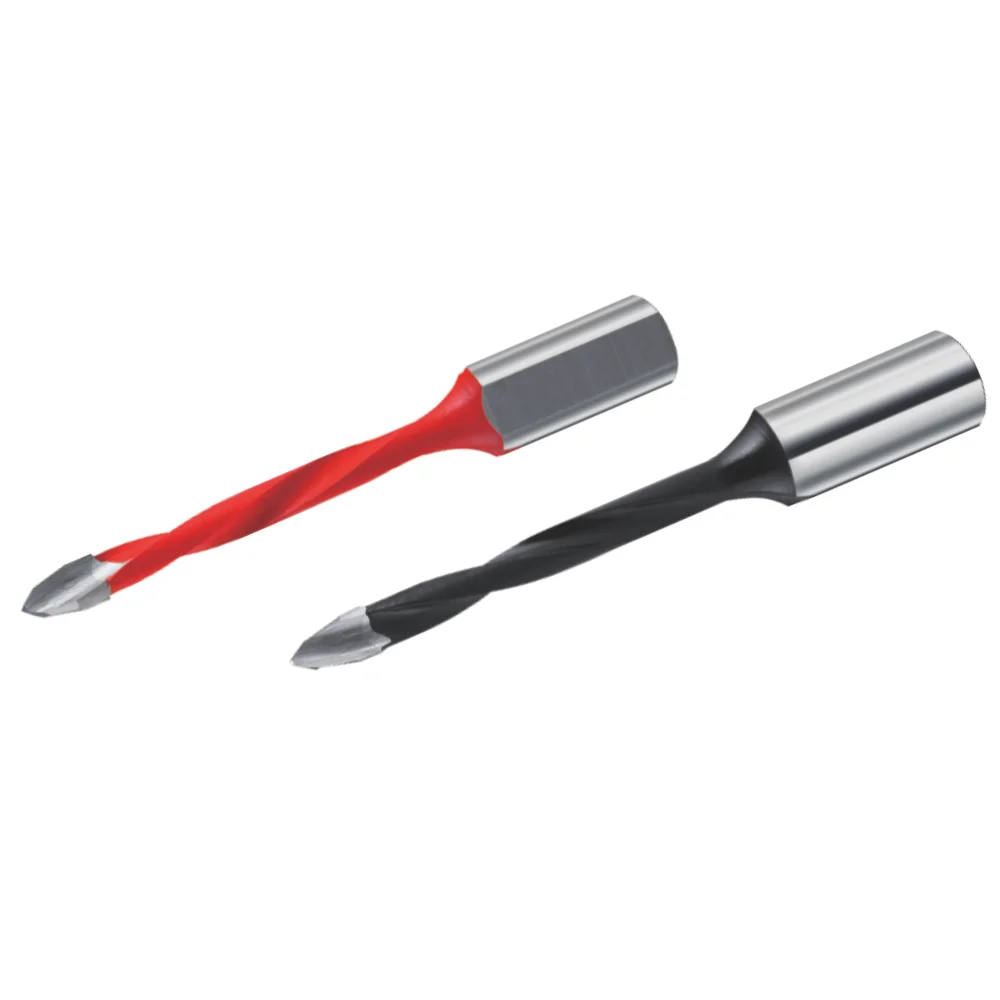
This bit features a sharp center point that digs into the wood to keep the drill from wandering. The outer cutting edges are very sharp, ensuring the hole stays clean and free of splinters, making it the go-to choice for furniture assembly.

Brad Point Drill Bit for Wood
2. Forstner Bit
Forstner bits create flat-bottomed holes, which are ideal for installing concealed hinges or inserting wooden plugs. They provide a very smooth cut and remain stable even when drilling near the edge of a board or overlapping previous holes.
3. Spade Bit
With a shape resembling a small shovel, the spade bit removes material very quickly and is relatively inexpensive. It is mainly used for rough work where the finish doesn’t matter much, such as running wires or pipes through studs. While fast, it often leaves rough edges around the hole.
4. Countersink Bit
This tool drills a pilot hole and carves out a conical recess at the same time. This allows wood screws to sit flush with or below the surface, creating a clean look and preventing the screw heads from catching on anything. It is essential for building shelves and cabinets.
5. Auger Bit
Recognizable by its deep spiral design, the auger bit is excellent at clearing out wood chips and is specifically made for drilling through thick timber. If you need to drill deep, large-diameter holes, an auger bit is more efficient than a standard bit and less likely to get stuck.
Twist Drill Bits: Pros and Cons for Wood
| Category | Pros | Cons |
| Versatility | Truly multi-purpose; can drill through wood, metal, and plastic without changing bits. | Not optimized for wood fibers, leading to less professional results. |
| Accuracy | Available in a vast range of sizes, including very small diameters for pilot holes. | The tapered tip lacks a centering point, making the bit prone to “wandering” or walking across the wood. |
| Cut Quality | Efficiently bores through basic material. | High risk of “tear-out” (splintering) at the entry and exit points. Leaves a V-shaped bottom rather than a flat one. |
| Durability | Solid construction; can be easily reground and sharpened with a bench grinder if they become dull. | Poor chip clearance in deep holes can cause friction heat, potentially scorching the wood. |
| Cost | Very affordable and widely available in hardware stores; great value for general utility. | Not ideal for fine furniture making or working with expensive hardwoods where finish is key. |
Brad Point Drill Bits: Precision for Clean Holes
| Category | Pros | Cons |
| Accuracy | Features a sharp center spur that locks onto the mark instantly, preventing the bit from wandering or walking. | If the center point is bent or damaged, the bit becomes difficult to align and loses its primary advantage. |
| Cut Quality | The outer spurs shear the wood fibers before the main cutting edge hits, resulting in exceptionally clean, splinter-free holes. | Strictly for wood and soft plastics; hitting a metal nail or using it on hard materials will ruin the cutting edges. |
| Chip Removal | Designed with wider flutes compared to twist bits, allowing for faster chip clearance and reduced heat buildup. | For very deep holes, you still need to retract the bit frequently to clear packed sawdust and prevent burning. |
| Application | The gold standard for fine furniture, dowel joinery, and projects where aesthetics and precision are non-negotiable. | Generally more expensive than standard twist bits and sometimes harder to find in a full range of fractional sizes. |
| Maintenance | Provides superior performance out of the box with minimal vibration. | Difficult to sharpen. Due to the complex geometry of the three points, professional sharpening is usually required. |
Spade Bits: Fast, Large-Diameter Drilling
| Category | Pros | Cons |
| Drilling Speed | Extremely fast for boring large-diameter holes; much more efficient than twist bits for big tasks. | The aggressive cutting action causes significant vibration, making it harder to maintain a steady, vertical path. |
| Cost-Effectiveness | Very inexpensive to manufacture. A full set often costs less than a single high-quality Forstner bit. | Generally considered disposable; while they can be sharpened, they are often replaced once they become dull. |
| Chip Clearance | The open “paddle” design allows chips to fly out easily, preventing clogging or overheating even in thick wood. | Leaves a very rough finish inside the hole. Causes massive “blow-out” (splintering) on the back side of the wood. |
| Size & Reach | Can drill large holes using a small drill chuck. Extension shanks are common for drilling through deep wall studs or joists. | Cannot produce a flat-bottomed hole (due to the long center point) and is unsuitable for overlapping holes. |
| Application | Ideal for “rough-in” work like running electrical wires or plumbing pipes where speed is more important than aesthetics. | Unsuitable for fine cabinetry or furniture where the hole remains visible to the eye. |
Forstner Bits: Smooth and Flat-Bottomed Holes
| Category | Pros | Cons |
| Hole Quality | Produces the cleanest, smoothest holes possible with razor-sharp edges and a perfectly flat bottom. | Much slower cutting speed compared to spade bits or auger bits. |
| Precision | Guided by the wide outer rim rather than a center point, allowing for extreme stability without wandering. | Requires significant pressure to feed; works best in a drill press rather than a handheld drill. |
| Versatility | Excellent for drilling at an angle (pocket holes), on the edge of a board, or creating overlapping holes. | Generates a lot of heat due to the large surface contact area; requires frequent pauses to cool down. |
| Specialty Use | The go-to bit for installing European-style concealed hinges and making decorative counterbores. | Expensive to buy and difficult to sharpen at home due to the complex circular rim design. |
| Chip Removal | Cuts wood fibers cleanly into shavings rather than dust. | Does not clear chips automatically; you must manually lift the bit frequently to prevent clogging and burning. |
Auger Bits: Deep Holes Made Easy
| Category | Pros | Cons |
| Deep Drilling | The long, thick spiral design is specifically engineered to drill deep into timber while maintaining a straight path. | Heavy and bulky; requires a high-torque drill to operate safely, especially for large diameters. |
| Self-Feeding | Most feature a threaded “screw tip” that pulls the bit into the wood, requiring very little manual downward pressure. | The screw tip makes it aggressive; once it starts, it is difficult to stop or adjust the depth precisely. |
| Chip Removal | The deep, wide flutes (hollow center) act like a conveyor belt, pulling wood chips out of deep holes efficiently. | Not suitable for thin materials or delicate craft work, as the aggressive tip can easily split small workpieces. |
| Stability | The thick spine prevents the bit from bending or flexing, ensuring the exit point is exactly where you planned. | Can be dangerous if the bit hits a knot or nail; the high torque can cause the drill to kick back and twist your wrist. |
| Cut Quality | Usually features a single cutting spur that scores the wood for a relatively clean entry. | Leaves a rougher finish than a Forstner or Brad Point bit; primarily a structural tool rather than a fine finishing one. |
Tips for Selecting the Best Drill Bit for Your Woodworking Project
Selecting the right Drill Bit for Wood is about more than just efficiency; it is about protecting your expensive lumber. We recommend reviewing your requirements before you place an order or start drilling.
Taking a moment to prepare helps you avoid common mistakes that are often impossible to fix by the time you reach the final stages of your project.
1. Match the Bit to the “Function”
The type of hole you need determines the tool you choose:
-
Furniture Assembly/Pilot Holes: Use a Brad Point Bit. Its sharp tip ensures the bit doesn’t wander, and it leaves a clean, professional edge.
-
Hinge Installation/Flat-Bottom Holes: Use a Forstner Bit. This is the only choice if you need a large-diameter, shallow hole with a flat base (like those for European-style cabinet hinges).
-
Rough Construction/Utility Work: Use a Spade Bit or Auger Bit. These prioritize speed and depth over a smooth finish.
2. Consider Wood Hardness
The density of the wood dictates the material of the bit:
-
Softwoods (e.g., Pine, Cedar): Standard carbon steel bits are usually sufficient.
-
Hardwoods (e.g., Oak, Walnut, Teak): Always opt for HSS (High-Speed Steel) bits. Hardwoods generate significant friction heat; lower-quality bits can quickly lose their temper (soften) or scorch the wood.
3. Account for Depth and Diameter
-
Small and Deep: If you are drilling through thick beams or posts, an Auger Bit is best because its deep flutes clear out chips efficiently, preventing the bit from seizing.
-
Large and Shallow: A Forstner Bit offers the most stability and the cleanest result.
-
Deep Reach (Construction): Look for Spade Bits with extension shanks to reach through walls or heavy joists.
4. Check Shank Compatibility
Ensure the bit will fit your drill’s chuck:
-
Round Shank: The most common type; fits standard three-jaw chucks.
-
Hex Shank (1/4″): Designed for quick-change connectors and impact drivers; prevents the bit from slipping under heavy loads.
-
SDS Shank: Used for heavy-duty rotary hammers; rarely used in standard woodworking. Make sure you don’t buy these by mistake.
5. Don’t Forget “Countersinking”
If you want your screw heads to sit flush with or below the wood surface, pick up a set of Countersink Bits. These allow you to drill a pilot hole and create a recess for the screw head in one step, preventing the wood from splitting when you drive the screw.
Quick Selection Guide
| If your goal is… | Recommended Choice |
| Maximum precision and clean edges | Brad Point Bit |
| Installing concealed cabinet hinges | Forstner Bit |
| Boring wire holes through thick beams | Auger Bit |
| Fast, inexpensive large holes | Spade Bit |
| General utility or occasional metal work | HSS Twist Bit |
Maintenance and Care of Wood Drill Bits
Here is the natural, conversational English translation of the maintenance guide:
To keep your Wood Drill Bits lasting longer and cutting accurately, regular care is essential.
The most important thing is to prevent overheating. When drilling into hardwoods, the friction from high-speed rotation generates heat that can soften the steel and dull the bit quickly. When working on deep holes, don’t try to go all the way in one breath. Use a “pecking” motion—drill in a bit, pull back to clear the chips, and let the air cool the bit down.
Once you’re done, don’t just toss your bits back into the toolbox. Resin and moisture from the wood can get stuck in the flutes, which leads to grime buildup and rust. Take an old toothbrush or a stiff brush to clear out the sawdust, then wipe them down with a bit of thinner to remove any sticky resin. Before putting them away, apply a light coat of anti-rust oil to keep the moisture out.
How you store them matters too. The cutting edges are sharp but fragile, and they’ll chip if they’re constantly banging into each other. It’s best to keep them in their original case or a dedicated bit rack where they stay separated.
Finally, if you notice smoke or the cuts are looking rough, your bit is likely dull. While you can touch up twist or spade bits with a file, specialized bits like Forstner or brad point bits are tricky. If you aren’t confident in your sharpening skills, it’s better to have a professional do it. An unevenly sharpened bit will wobble and can easily ruin a good piece of wood.