The Brad Point Drill Bit is a core tool designed for woodworking enthusiasts and professional craftsmen who demand extreme drilling precision.
When working with expensive wood or complex furniture assemblies, standard drill bits often tend to wander on smooth surfaces or cause tear-out along the edges. Thanks to its distinctive needle-like center point and sharp peripheral cutting spurs, this bit effectively eliminates hole drift and exit splintering.
This “locate first, cut second” design makes the Brad Point Drill Bit the go-to choice for achieving near surgical-level accuracy in woodworking projects.
In this article, we will take a deep dive into the primary uses of Brad Point Drill Bits, the materials they are best suited for, and the critical situations where they should not be used—helping you unlock their full potential and achieve clean, precise holes every time.
Primary Uses of Brad Point Drill Bits
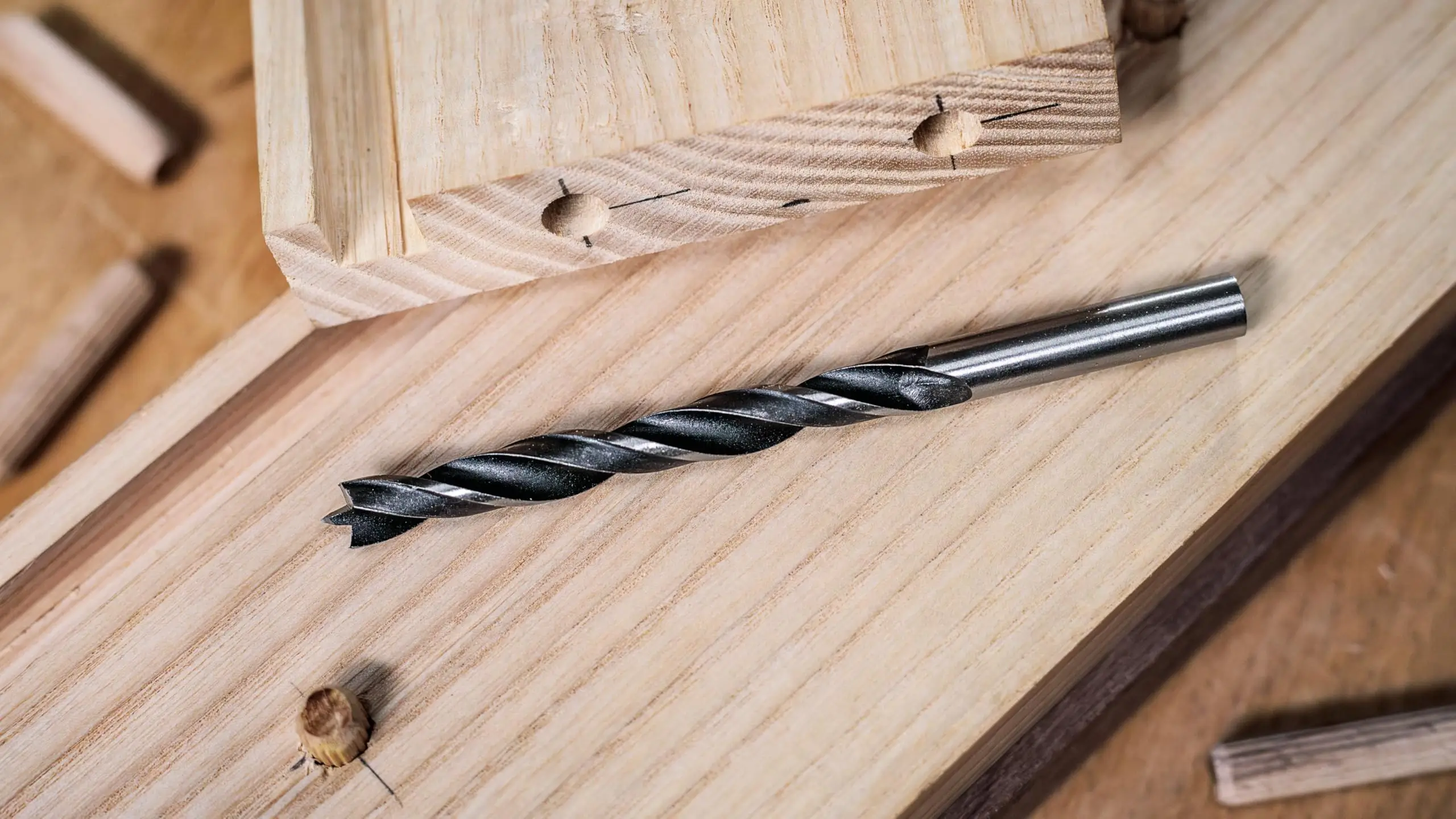
Brad point drill bits are purpose-built tools designed specifically for drilling clean, accurate holes in wood.
Their shape is easy to recognize: a sharp, needle-like center point for precise positioning, flanked by two wing-like cutting spurs on the sides. The core purpose of this design is to solve the common problems of standard drill bits when working with wood—such as slipping on the surface and leaving rough, splintered edges around the hole.
1. Precision Positioning
The most significant use of a brad point bit is for pinpoint accuracy. Unlike standard twist bits that tend to wander or “skate” across a smooth wood surface, the sharp center tip bites into the wood immediately. This ensures the hole is drilled exactly where you marked it without the need for a pilot hole.
2. Creating Clean Holes
These bits are engineered to produce professional-grade results:
-
Reducing Splintering: The outer spurs act like knives, slicing the wood fibers around the perimeter before the main cutting edge removes the material.
-
Smooth Edges: This process results in a very clean entry and exit, making them ideal for visible surfaces, plywood, or delicate veneers where tearing must be avoided.
3. Dowel Joinery
Brad point bits are the standard choice for drilling holes for wooden dowels. Because they produce perfectly round, accurately sized holes with relatively flat bottoms, they ensure a snug and secure fit for furniture assembly and cabinetry.
4. Drilling Through Thin Materials
When drilling through thin boards or soft plastics, standard bits often cause the back of the material to shatter or “blow out.” The geometry of the brad point bit allows it to exit the material more gently, maintaining the integrity of the workpiece.

Materials Suitable for Brad Point Drill Bits
Brad Point Drill Bits are specifically engineered for materials that require high positioning accuracy and clean hole walls. Below is a breakdown of suitable materials:
1. Various Types of Wood
This is the primary application for brad point bits:
-
Hardwoods: Such as oak, walnut, and maple. These bits effectively shear through tough fibers, preventing the edges of the hole from splintering.
-
Softwoods: Such as pine and cedar. Since softwood fibers are loose and prone to tearing, the cutting spurs of a brad point bit slice the surface cleanly.
2. Engineered Wood Products
Brad point bits perform exceptionally well on manufactured boards, especially those with coatings or veneers:
-
Plywood: They significantly reduce “blow-out” (shattering) on the exit side of the board.
-
MDF and Particle Board: These materials are uniform but brittle; brad point bits produce neat, sharp edges.
-
Veneers and Laminates: The outer spurs score the surface layer before the main hole is drilled, preventing the delicate veneer from peeling or chipping.
3. Certain Soft Plastics
-
Nylon or Polyethylene (PE/PP): The center point prevents the bit from skating on the smooth, slippery surface of these plastics.
-
Acrylic: When used at the correct speed, brad point bits are less likely to cause stress cracks compared to standard twist bits.
Common Woodworking Applications of Brad Point Drill Bits
In real woodworking, Brad point bits are the go-to when there is zero room for error. They are specifically used for high-stakes tasks like drilling precise holes for dowels or working on expensive timber where you can’t afford a slip or a splintered edge.
Because the tip locks onto a center point and the cutters slice clean, circular openings, these bits are perfect for furniture assembly or any project where the finished hole will be visible.
1. Dowel Joinery and Furniture Assembly
This is the most classic application for brad point bits.
-
Alignment Accuracy: When creating doweled joints, hole placement must be exact. The sharp center tip allows you to plunge directly into the marked center point, ensuring that holes in mating workpieces align perfectly.
-
Snug Fit: These bits produce consistently sized, round holes, ensuring that wooden dowels fit securely without wobbling.
2. Installing Cabinet Hardware
-
Knobs and Pulls: When drilling through expensive cabinet doors or drawer fronts, avoiding surface splintering or chipping of the paint/veneer is critical. Brad point bits ensure the entry hole is as clean as a surgical cut.
-
Hinge Positioning: For hardware that requires multiple small, precisely located holes, these bits prevent the drill from “walking” away from your layout lines.
3. Drilling Through-Holes
When you need to drill completely through a piece of wood:
-
Minimizing Exit Blow-out: Standard bits often push a large chunk of wood out the back as they exit. Using a brad point bit—especially when paired with a sacrificial backup board—results in a much cleaner exit hole.
4. Creating Shelf Pin Holes
-
These bits are ideal for drilling the series of shallow holes in cabinet gables used to support adjustable shelves. They ensure each hole is uniform in depth and location, with clean edges that won’t interfere with the insertion of shelf pins.
5. Fine Crafts and Model Making
-
In small-scale woodworking or model building, materials are often delicate and prone to splitting. The cutting geometry of a brad point bit distributes pressure more evenly, reducing the risk of cracking small or intricate workpieces.
| Application | Key Function | Core Advantage |
| Dowel Joinery | Creating holes for furniture joints | Alignment accuracy ensures mating workpieces match perfectly. |
| Cabinet Hardware | Drilling for knobs, pulls, and hinges | Surface protection prevents chipping of expensive veneers or paint. |
| Through-Holes | Drilling completely through boards | Minimizes blow-out for a clean exit on the back of the wood. |
| Shelf Pin Holes | Drilling rows of support holes | Uniformity ensures all pins sit at the same depth and position. |
| Fine Crafts | Working with small or fragile pieces | Even pressure reduces the risk of cracking delicate materials. |
What Brad Point Drill Bits Should NOT Be Used For?
Although brad point drill bits perform exceptionally well when drilling wood, their design also means there are situations where they should never be used. To protect both your tools and your safety, be sure to avoid the following scenarios:
1. Metalworking
This is the most critical restriction. These bits must never be used on hard steel, stainless steel, or even softer metals like aluminum and copper. The sharp center point will snap off immediately, and the delicate cutting spurs will be blunted instantly.
2. Masonry and Concrete
These materials require percussion or grinding action rather than slicing. Using a brad point bit on stone or concrete will cause the bit to overheat, lose its temper, and become completely destroyed.
3. Extremely Hard or Brittle Plastics
While suitable for soft plastics, these bits can be problematic for high-density engineering plastics. The outer spurs may catch the material aggressively, leading to shattering or binding.
4. Enlarging Existing Holes
A brad point bit relies entirely on its center point to remain stable. If a hole already exists and is larger than the center point, the bit will lose its anchor. This causes the bit to chatter violently, which can ruin the workpiece and potentially cause injury.
5. Very Deep Hole Drilling
The flutes on many brad point bits are designed for precision in shallow to medium depths rather than high-volume waste removal. In extremely deep holes, wood chips can clog the flutes, leading to friction, overheating, and scorched wood.
Summary Table: What to Avoid
| Material/Task | Reason for Avoidance | Recommended Alternative |
| Metals | Destroys spurs and center point | Twist Drill Bit |
| Masonry | Rapid overheating and dulling | Masonry Bit |
| Existing Holes | Lack of center stability causes jumping | Forstner Bit or Step Bit |
| Very Deep Holes | Poor chip clearance/Overheating | Auger Bit |
Are Brad Point Drill Bits Right for Your Project?
Deciding whether brad point drill bits are right for your project depends on whether you have a “perfectionist” requirement for pinpoint accuracy and clean, splinter-free edges.
If you are immersed in fine furniture making, installing high-end cabinet hardware, or creating seamless dowel joints, these bits are undoubtedly your best choice. Their unique center-point design ensures the drill never wanders, saving you the frustration of repairing ruined workpieces.
When selecting professional tools for these tasks, many seasoned woodworkers turn to specialized brad point drill bits manufacturers like ZC Tools. Known for their dedication to high-quality woodworking bits, ZC Tools maintains rigorous standards for material hardness and durability, while their precision-ground cutting edges ensure every hole is as clean as a surgical cut.
As long as your project doesn’t involve metal or masonry, owning a high-quality set of brad point bits from a trusted producer like ZC Tools will significantly elevate your woodworking experience.