Europe’s woodworking machinery and tools market exceeded €4.2 billion in 2023, according to data from Eumabois, the European Federation of Woodworking Machinery Manufacturers — yet finding a reliable woodworking tools distributor Europe buyers can actually trust still takes serious legwork. This guide cuts through the noise: we’ve vetted distributors across 14 countries, evaluated their product ranges, minimum order terms, logistics networks, and after-sales support, then organized everything so you can shortlist partners in minutes instead of weeks. Whether you run a cabinet shop in Bavaria, a joinery in Portugal, or an online retail operation shipping across the EU, the list below is built to match your sourcing needs.
How We Vetted These European Woodworking Tools Distributors
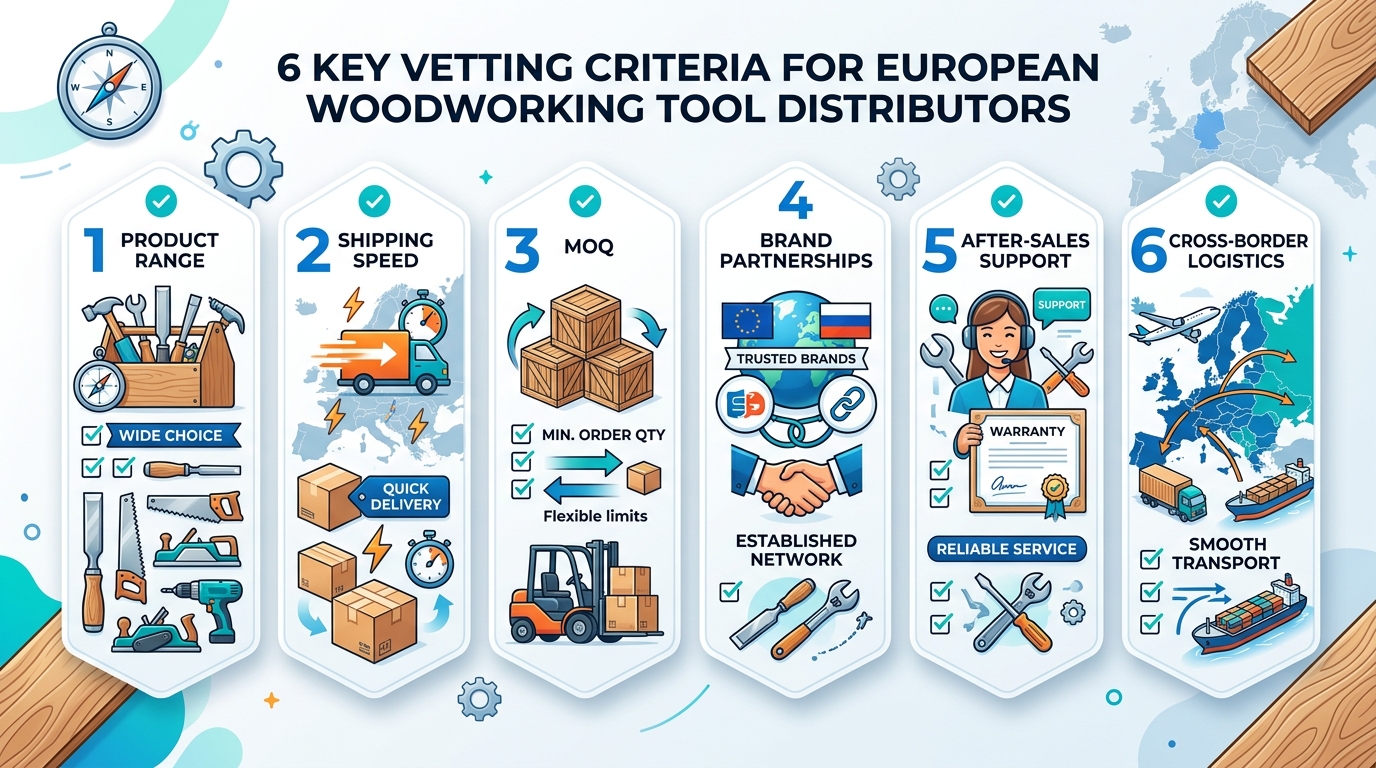
We didn’t just Google “woodworking tools distributor Europe” and list whoever showed up first. Every company on this list went through a structured evaluation across six specific criteria, weighted by what actually matters to professional buyers and workshop owners placing bulk orders.
Product range depth was the first filter. A distributor carrying only router bits or only saw blades didn’t qualify. We looked for catalogs spanning hand tools, power tools, CNC tooling, and consumables — with at least 2,000 SKUs as a baseline. If you need a deeper understanding of CNC-specific tooling categories, our guide to cutting tools for CNC woodworking breaks that down thoroughly.
Shipping and logistics capability came next. Can they deliver cross-border within the EU in under 5 business days? Do they handle customs paperwork for non-EU destinations like the UK or Switzerland? We verified actual delivery timelines, not just promises on a homepage. Distributors offering pallet-level freight alongside single-unit orders scored higher.
We also assessed minimum order requirements (anything above €500 MOQ was flagged), brand partnerships with recognized manufacturers like Leitz, Freud, CMT, or Festool, and after-sales support quality — including warranty processing speed, technical consultation availability, and return policies. According to the European Federation of Woodworking Machinery Manufacturers (Eumabois), after-sales service remains one of the top three decision factors for B2B buyers in this sector. That tracks with what we found: distributors with dedicated technical support teams consistently earned stronger reputations among repeat customers.
Leading Woodworking Tools Distributors in Western Europe
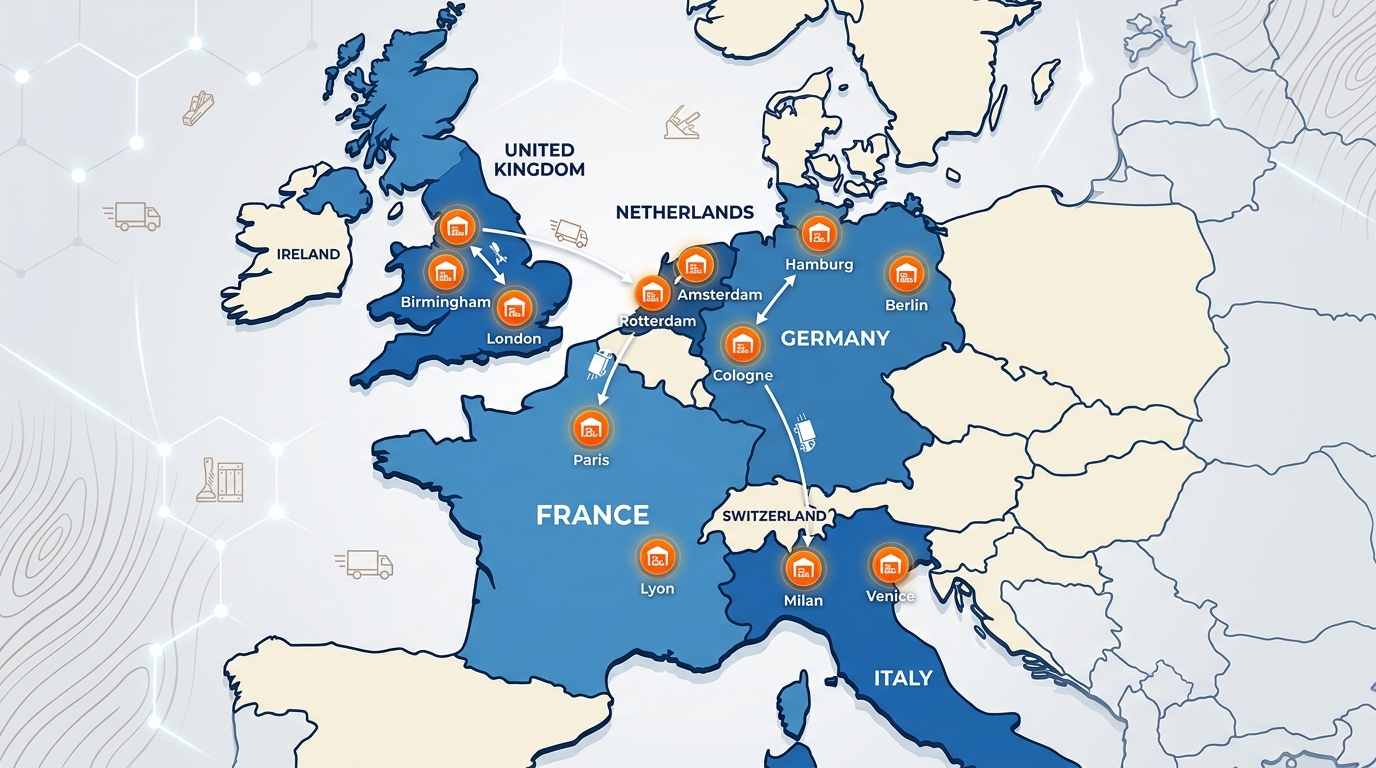
Western Europe dominates the distribution landscape for professional woodworking tools, and five countries account for the bulk of B2B supply chains: Germany, France, the UK, Italy, and the Netherlands. Each market has its own heavyweights, and knowing who specializes in what can save buyers months of trial and error.
Germany is the obvious starting point. Hoffmann Group, headquartered in Munich with over 135,000 products in catalog, operates massive warehouse facilities in Nuremberg and distributes Leitz, Festool, and Mafell lines across the continent. For buyers focused specifically on CNC tooling, Leuco in Horb am Neckar sells direct and through regional partners — their CNC cutting tool range is a benchmark in panel processing. France leans on Otelo (part of the Manutan group) and Sidamo for mid-market distribution, both strong in abrasives and portable power tools with next-day delivery across the Hexagone.
The UK market relies heavily on Axminster Tools for trade and semi-professional supply, while Scott+Sargeant handles heavier industrial machinery and tooling from its base in Sussex. In Italy, Fapil and Utensil Centro cater to the country’s enormous furniture manufacturing sector — think carbide-tipped tooling for Biesse and SCM machines. The Netherlands punches above its weight through Rotec and Toolnation, both operating as efficient woodworking tools distributors across Europe via cross-border e-commerce platforms with warehouses in Eindhoven and Rotterdam.
Mid-market specialists matter here too. Not every buyer needs a 50,000-SKU catalog. Smaller distributors like CMT Orange Tools (Italian-founded, Dutch-distributed) focus tightly on router bits, saw blades, and boring tools — areas where product knowledge beats sheer inventory size.
Trusted Distributors in Northern and Eastern Europe
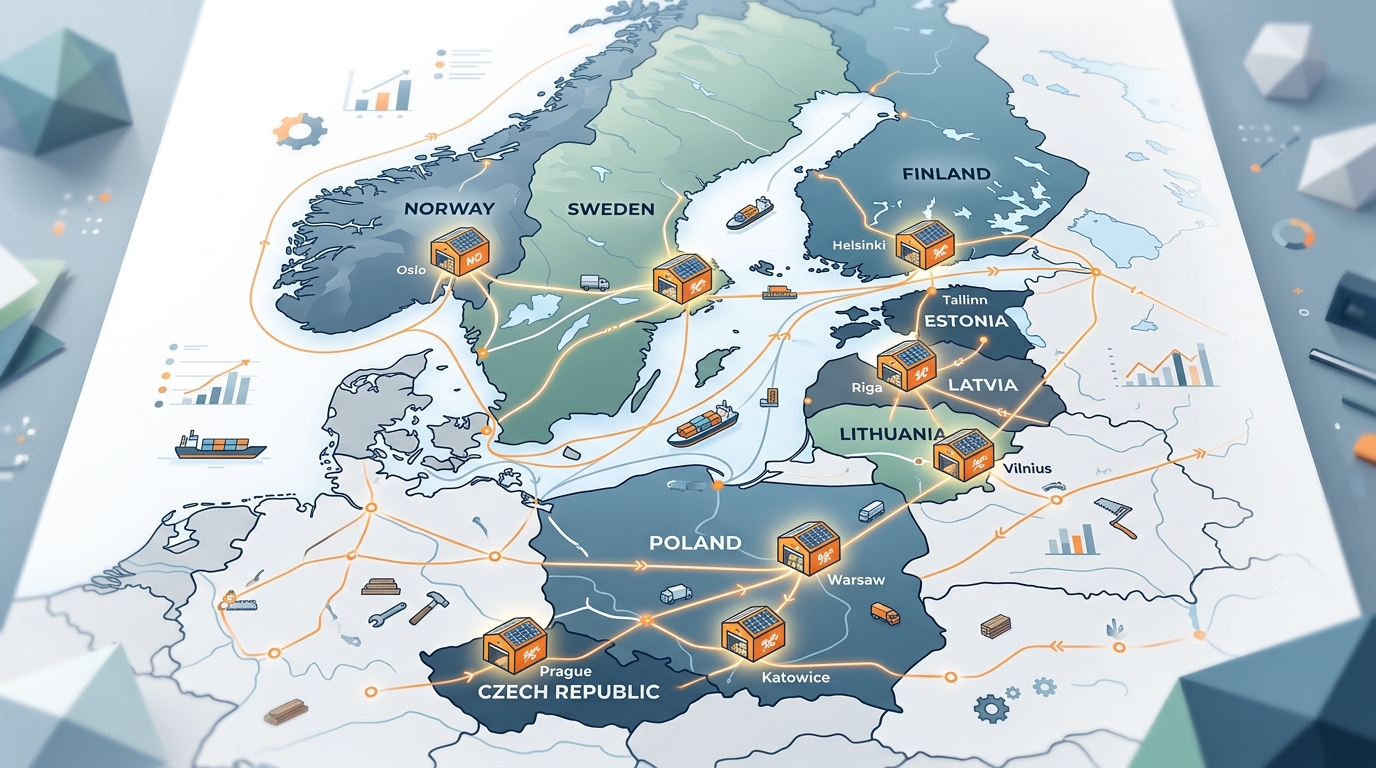
Scandinavia and Eastern Europe have quietly become critical nodes in the continental supply chain. Poland alone exported over €3.2 billion worth of wood products in 2023, according to Statistics Poland, and that production volume drives serious demand for professional-grade tooling. Distributors here tend to carry leaner inventories but offer noticeably lower markup — sometimes 12–18% below Western European equivalents for identical SKUs.
In Scandinavia, firms like Toolstore (Sweden) and Stayer Nordic serve furniture manufacturers and joinery shops across Norway, Finland, and Denmark. Their strength? Fast regional logistics and deep familiarity with FSC-certified timber workflows. The Baltic states — Lithuania, Latvia, Estonia — rely on a smaller pool of specialists, but companies such as Stokker Group cover industrial tooling with warehouse hubs in Riga and Tallinn that ship within 48 hours across the region.
Poland and the Czech Republic punch above their weight. Polish distributors like Fenes and Gühring Polska stock everything from industrial woodworking cutting tools to CNC consumables, often sourcing directly from German and Italian manufacturers. Czech-based Pilana Tools operates its own production facility, which means tighter quality control and shorter lead times for custom orders. For any woodworking tools distributor in Europe looking to balance cost and reliability, this region deserves a hard look.
Hand Tools, Power Tools, and CNC — Specialist Distributors Compared
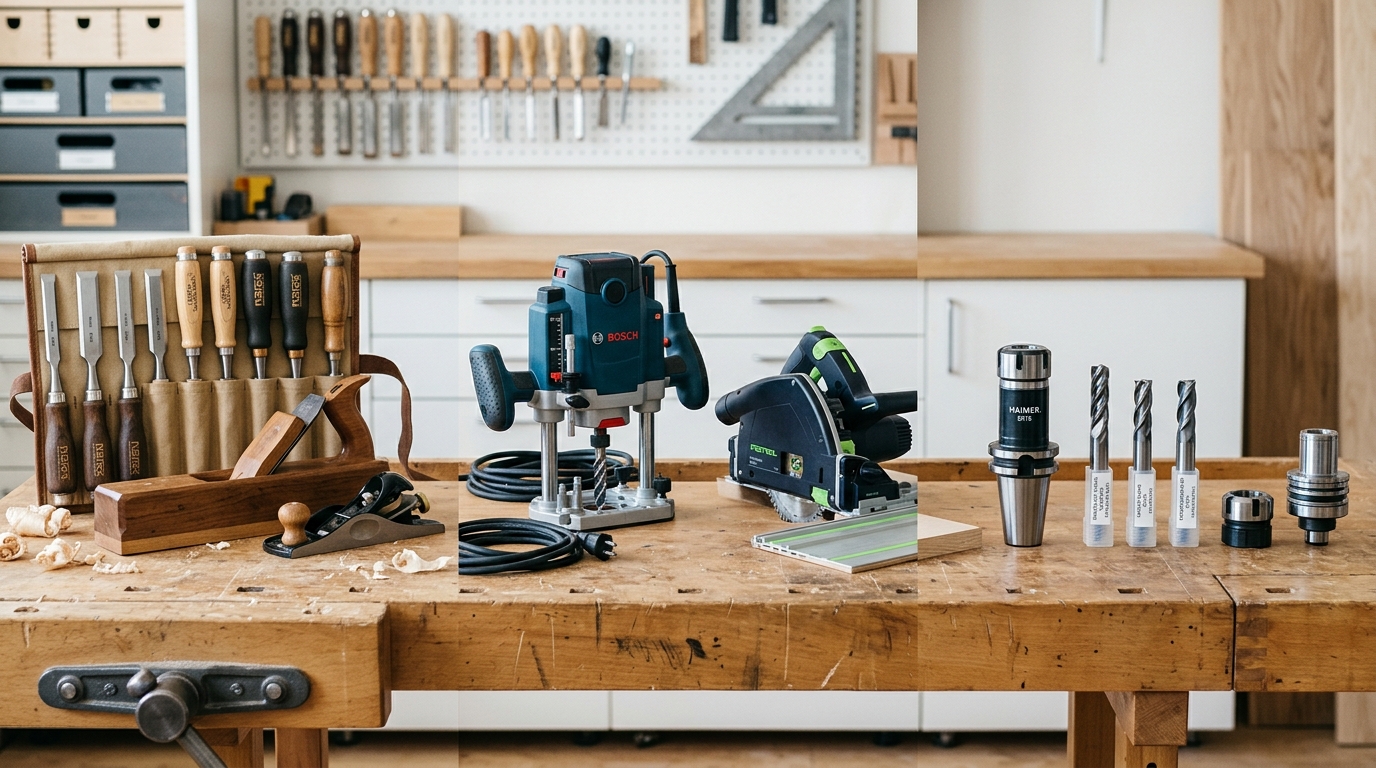
Not every distributor stocks everything. The European market splits roughly into three lanes: hand tool specialists, power tool distributors, and CNC machinery/component suppliers. Picking the wrong lane wastes time and usually costs more.
Hand tool specialists — companies like Dictum in Germany or Classic Hand Tools in the UK — curate catalogs of chisels, planes, marking gauges, and carving knives. Their strength is depth within a narrow range. You’ll find 15 variations of a Japanese pull saw but zero CNC routers. For workshops focused on bespoke furniture or restoration, these distributors deliver expertise a generalist simply can’t match.
Power tool distributors operate at higher volume. They carry brands like Festool, Makita, and DeWalt across corded and cordless lines, often bundling accessories and service contracts. Margins are tighter here, so bulk pricing and logistics reliability become the real differentiators when choosing a woodworking tools distributor Europe buyers can depend on long-term.
CNC component suppliers sit in a different category entirely. They deal in spindle motors, toolholders, and precision cutting bits — products where a 0.01 mm tolerance matters. If your operation runs nesting machines or edge banders, you need a distributor who understands CNC-specific cutting tools and can advise on feed rates, not just ship boxes. Companies like Leitz exemplify this tier, offering both tooling and technical consultation across 7+ European countries.
| Category | Typical MOQ | Lead Time | Technical Support |
|---|---|---|---|
| Hand Tools | 1–10 units | 2–5 days | Product knowledge, limited |
| Power Tools | 5–50 units | 3–10 days | Brand-backed warranty service |
| CNC Components | 10–100+ units | 5–21 days | Application engineering, on-site calibration |
Match your sourcing to your actual production profile. A cabinet shop running three CNC routers has zero overlap with a luthier ordering Japanese chisels — and their distributors shouldn’t overlap either.
What to Look for When Choosing a European Woodworking Distributor
Price matters, obviously. But picking a woodworking tools distributor in Europe based on price alone is how shops end up with six-week lead times and zero after-sales support. The real evaluation starts with MOQ flexibility. Some distributors require €5,000 minimum orders; others will ship a single box of router bits. If you’re a mid-sized cabinet maker testing a new tooling line, rigid minimums kill experimentation.
EU compliance is non-negotiable. Every cutting tool entering the European market must carry proper CE marking and meet the Machinery Directive 2006/42/EC requirements outlined by the European Commission. Ask distributors for declarations of conformity — not just a CE logo stamped on packaging. A reliable partner will provide full documentation without hesitation.
Catalog depth reveals a distributor’s seriousness. Can they supply everything from basic TCT saw blades to specialized CNC tooling? The best distributors source from both European premium brands and competitive international manufacturers like ZC Tools, giving buyers a genuine range of price-to-performance options. For a deeper breakdown of what to prioritize in industrial tooling, check out this complete buyer’s guide to industrial woodworking cutting tools.
Finally, evaluate warranty handling and technical support. Will they replace a defective batch within 48 hours or open a three-month investigation? Do they employ tooling engineers who can recommend feed rates, or just salespeople reading spec sheets? These details separate order-takers from genuine distribution partners.
Import, Logistics, and Cross-Border Buying Tips Within Europe
Intra-EU trade eliminates customs duties, but it doesn’t eliminate paperwork. You still need a valid EORI number and must file Intrastat declarations once your annual purchases from another EU member state exceed the threshold — €800,000 in Germany, just €150,000 in Poland. Miss that filing and fines stack up fast.
VAT trips up more buyers than logistics does. Under the reverse-charge mechanism, a woodworking tools distributor in Europe selling B2B across borders typically invoices without VAT, shifting the obligation to the buyer’s local tax return. Confirm your supplier applies this correctly; errors create double-taxation headaches that take months to untangle. The EU VIES system lets you verify VAT numbers instantly before placing orders.
Sourcing from non-EU countries — Turkey, the UK post-Brexit, or China — adds anti-dumping duties and CE marking verification at the border. Freight consolidation through hub ports like Rotterdam or Hamburg can cut per-unit shipping costs by 15–25% compared to direct small-lot shipments. Lead times for consolidated sea freight from Asia typically run 6–8 weeks door-to-door, so plan reorders around that window. If you’re importing industrial cutting tools, double-check that packaging meets EU phytosanitary rules — wooden crates require ISPM-15 heat treatment stamps.
Frequently Asked Questions About Woodworking Tools Distribution in Europe
How do I request distributor pricing?
Most European distributors don’t publish trade pricing online. You’ll typically need to fill out a B2B inquiry form or email their sales department directly with your company registration number, estimated order volume, and the specific product categories you need. Expect a response within 2–5 business days. Some larger distributors like Hoffmann Group or Leitz require a minimum annual spend—often €5,000 or more—before unlocking tiered pricing.
Do distributors offer private labeling?
Yes, but selectively. A woodworking tools distributor in Europe will usually require minimum order quantities of 500–1,000 units per SKU for private-label runs on items like carbide-tipped saw blades or router bits. Custom packaging and laser-engraved branding add 3–6 weeks to production timelines. Smaller distributors may broker this through their manufacturing partners rather than handling it in-house.
How can I verify a distributor’s legitimacy?
Check their VAT registration through the European Commission’s VIES system. Cross-reference their claimed brand partnerships by contacting manufacturers directly. Red flags include no physical warehouse address, reluctance to provide trade references, and payment terms that demand 100% upfront via wire transfer.
What are typical lead times for bulk orders?
Stock items ship in 3–7 business days within the EU. Special orders or custom-spec tooling—think non-standard bore diameters or unusual coatings—take 4–8 weeks. During peak season (September through November), add another week. Any woodworking tools distributor Europe buyers work with should confirm lead times in writing before you commit to a purchase order.
Choosing the Right Distributor for Your Woodworking Business
Start with three names, not thirty. Pull from the vetted lists above, filter by your region and tool category, and send each distributor a specific inquiry — not a vague “send me your catalog” email. Ask for pricing on 5–10 SKUs you actually buy regularly, request lead times to your exact delivery address, and confirm minimum order values upfront. That single email tells you more than hours of website browsing.
Compare responses side by side. One distributor might beat another on unit price but charge 40% more for shipping to your postal code. Another might offer 60-day payment terms that free up cash flow worth more than a 3% discount. The right woodworking tools distributor in Europe for your shop depends on your specific mix of volume, product type, and geography — there’s no universal winner.
Before committing to large orders, place a small trial purchase. Test actual delivery speed against the quoted timeline. Inspect packaging quality. Check whether the cutting tools match spec — if you’re running CNC operations, even minor deviations matter, so review this buyer’s guide for industrial woodworking cutting tools to know exactly what to verify. A trial order costing €200–€500 can save you from a €10,000 mistake.
Build the relationship deliberately. Share your 6-month demand forecast once trust is established. Distributors who see predictable volume will prioritize your orders during supply crunches and negotiate harder with manufacturers on your behalf. The European Federation of Woodworking Machinery Manufacturers (Eumabois) publishes market outlook reports that can help you back up those forecasts with industry data. Reliable supply chains aren’t found — they’re built, one good order at a time.