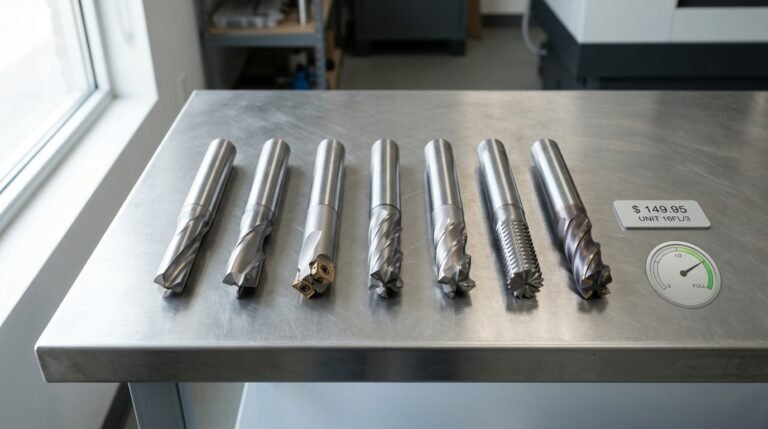
When it comes to dowel drill bits for high-end cabinetry, many people assume that as long as a hole is drilled, the job is done. In reality, dowel drilling is the foundation that determines whether a cabinet is structurally solid and whether the gaps align perfectly.
Row drilling may seem insignificant on the production line, but how smoothly the cabinet assembles later depends entirely on the precision of that single hole. If the hole edge chips or the diameter is even slightly off, the decorative surface immediately looks cheap, and the dowel pins cannot hold firmly. Over time, the cabinet will loosen and start to wobble. Modern factories are all about speed, and no one has the time to hide defects with manual rework. Not only does that increase labor costs, but high-end customers are unlikely to accept it.
Drilling, in fact, is not just about force—it is about how the drill bit material and cutting parameters work together. Drawing on real-world shop-floor experience, ZC Tools shares practical insights on how to eliminate edge chipping at the source and maintain consistently clean, precise dowel holes, even under tight production schedules.
Why Clean Cut Dowel Holes Are Essential for High-End Cabinetry?
In high-end cabinetry manufacturing, the quality of row-drilled holes directly affects the furniture’s structural strength, assembly precision, and overall appearance.
If the hole edges are chipped or the diameters are inaccurate, dowel pins cannot fit tightly, compromising the stability of the cabinet connections. High-quality drilling not only ensures that components fit seamlessly during assembly but also prevents the panels from loosening under stress, making it a key indicator of cabinetry craftsmanship.
1. Structural Integrity and Bonding Strength
In high-end furniture, the dowel is the primary method of joinery.
-
Precision Fit: A clean-cut hole has a perfect circular geometry and smooth internal walls. If the hole is jagged or irregular, the dowel cannot achieve full surface contact.
-
Glue Surface Area: Rough walls create air pockets or cause uneven glue distribution. Smooth, clean walls allow the adhesive to penetrate wood fibers uniformly, creating a chemical and physical bond that ensures the cabinet remains rock-solid for decades.
2. Eliminating Surface Tear-out
Luxury cabinets often utilize expensive materials such as fine veneers, high-gloss lacquers, or premium melamine.
-
Preventing Chipping: Standard bits often tear surface fibers as they enter the material. Clean-cut bits (typically featuring sharp “spurs”) shear the surface perimeter before the main cutters remove the waste.
-
Visual Perfection: Even a $0.5\text{mm}$ chip is glaringly obvious on dark veneers or high-gloss finishes. Clean holes ensure that the hardware interface looks refined and professional, even without decorative covers.
3. Achieving “Zero-Tolerance” Assembly
High-end cabinetry is defined by perfect seams and alignments.
-
Preventing Bit Drift: Clean-cut bits feature a precision center point (brad point) that prevents “walking” or shifting upon contact.
-
Cumulative Error: A single cabinet may have dozens of holes. If each hole is off by just $0.1\text{mm}$, the errors accumulate, resulting in a racked (crooked) carcass and misaligned doors. Perfect holes ensure every component snaps together like precision-engineered parts.
4. Hardware Longevity and Smooth Operation
-
Hinges and Slides: Premium cabinetry relies on top-tier hardware (like Blum or Hettich) that installs into pre-drilled holes.
-
Uniform Stress Distribution: If a hole is messy, mounting screws may go in at an angle, causing the hardware to sit improperly. Over time, this leads to dragging drawers or sagging doors. Clean holes ensure hardware stays torqued correctly and operates smoothly.
The Difference Between Mediocre and Masterpiece
| Feature | Standard Boring | Clean Cut |
| Appearance | Burrs and tear-out at the entry | Sharp, crisp edges |
| Fitment | Loose or forced fit | Perfect “suction” fit |
| Durability | Joint may loosen over time | Rock-solid structural stability |
| Glue Squeeze-out | Often messy due to poor tolerance | Minimal and controlled |
Key Challenges in Using Dowel Drill Bits for High-Quality Furniture
When using row-drill bits, it is essential to strictly control technical parameters. Because cabinet assembly requires extremely high precision, even minor deviations during the drilling stage can accumulate during later assembly, resulting in misaligned panel joints or loose connections.
These process-level errors directly impact the quality of the finished product, making it difficult to meet the standards of high-precision furniture. Therefore, controlling the cutting performance and positioning accuracy of the drill bits is a critical step to ensure stable production.
1. Surface Tear-out and Chipping
This is the most common and visible challenge, especially when working with expensive materials.
-
Material Sensitivity: High-gloss coatings, melamine-faced boards, and fine veneers are extremely brittle. If the bit’s spurs are not sharp enough or the geometry is incorrect, they will cause edge chipping the moment they contact the surface.
-
Exit Chipping: During through-hole boring, large-scale splintering often occurs on the backside if the backing board is uneven or if the feed rate is not properly controlled as the bit exits.
2. Heat Buildup and Chip Clearance
Heat generated during the boring process is the enemy of both tool life and processing quality.
-
Clogged Flutes: If the spiral flutes are not designed to eject wood chips rapidly, the waste material gets recut, creating frictional heat.
-
Burn Marks: Excessive heat causes carbonization (charring) of the hole walls. This isn’t just an aesthetic issue; more importantly, the charred layer prevents glue penetration, significantly reducing the bonding strength of the dowel.
3. Precision Drift and Positioning Tolerances
Maintaining consistency across thousands of holes in automated production is incredibly difficult.
-
Bit “Walking”: Upon contact, if the brad point is not stable or the material density is inconsistent (such as hard grain in solid wood), the bit may drift slightly.
-
Cumulative Tolerance: When assembling large carcasses, a deviation of just $0.1\text{mm}$ per hole can accumulate. This results in misaligned side and top panels, creating visible “steps” or gaps in the seams.
4. Balancing Tool Life with Material Diversity
Different materials wear down bits at vastly different rates.
-
High-Abrasive Materials: MDF and particleboard contain high amounts of resins and impurities that quickly dull carbide bits.
-
Hardwood Challenges: Dense species like White Oak or Rock Maple require bits that possess both extreme hardness to maintain an edge and enough toughness to prevent snapping.
-
Maintenance Costs: Knowing exactly when to resharpen or replace a bit is a technical skill. Using a dull bit not only slows down production but also increases the scrap rate.
| Challenge | Consequence | Recommended Solution |
| Tear-out | Visual defects; high scrap rate | Use bits with negative spur angles; optimize feed speed. |
| Burning | Weak glue joints; odors | Optimize the RPM to Feed Rate ratio; check flute geometry. |
| Drift | Poor seams; difficult assembly | Regularly check spindle runout; use solid carbide bits. |
| Wear | Inconsistent quality | Introduce Diamond (PCD) coatings; track tool life cycles. |
Top Drill Bit Types for Clean-Cut Dowel Holes in High-End Cabinetry
Choosing the right wood drill bit is fundamental to ensuring drilling quality. For different materials and processing requirements—such as solid wood, medium-density fiberboard (MDF), and laminated panels—the following types of drill bits are primarily used in production:
1. Brad Point Bits (Boring Bits for Blind Holes)
These are the most common bits used in cabinet assembly, specifically designed for dowel joints and shelf-pin holes.
-
Design Features: They feature a sharp center point (Brad Point) and two outer cutting spurs. The spurs shear the wood fibers around the perimeter before the main lifters remove the waste.
-
Why for High-End: They produce an extremely clean entry edge with virtually zero chipping or “halos.”
-
Best Use: Carcass assembly holes and System 32 shelf-pin holes.

Clean Cut Dowel Drill Bits for High-End Cabinetry
2. Through-Hole Bits (V-Point Bits)
When a hole must go entirely through a panel (such as for handles or back-panel fasteners), a V-Point bit is essential.
-
Design Features: The tip is ground to a distinct “V” shape or a steeper angle than a standard bit.
-
Why for High-End: Standard bits often cause “blow-out” or massive splintering when they exit the back of a panel. The V-Point geometry ensures minimal pressure on the exit fibers, resulting in a clean hole on both sides.
-
Best Use: Handle/Pull mounting holes and cable management ports.
3. Solid Carbide Bits
Unlike standard bits (which feature a carbide tip brazed onto a steel shank), these are ground from a single piece of solid tungsten carbide.
-
Design Features: Extremely high rigidity with zero flex.
-
Why for High-End: They eliminate “chatter” or micro-vibrations during high-speed machining, leading to superior hole diameter consistency. They are ideal for ultra-hard materials or highly abrasive MDF.
-
Best Use: High-precision CNC continuous production.
4. PCD (Polycrystalline Diamond) Tipped Bits
The “luxury” tier of drill bits, featuring cutting edges made of industrial diamonds.
-
Design Features: Extreme hardness and heat resistance.
-
Why for High-End: While expensive, they last 50+ times longer than carbide. For high-end finishes like HPL (High-Pressure Laminate) or carbon-fiber-reinforced panels, they maintain a scalpel-like sharpness that never chips.
-
Best Use: Large-scale automated lines and extremely fragile surface finishes.
Selection Guide by Bit Type
| Bit Type | Core Advantage | Best Material Match | Recommended Use |
| Brad Point | Perfect entry; precise centering | Solid wood, Plywood, MDF | Dowels, Shelf pins |
| Through-Hole | Prevents backside blow-out | All engineered panels | Bolts, Through-hardware |
| Solid Carbide | Zero vibration; high precision | Veneered panels, Hardwoods | Zero-tolerance assembly |
| Diamond (PCD) | Extreme life; ultimate edges | HPL, High-gloss, Phenolic | Long-term high-volume |
Tips to Maximize Precision and Efficiency with Dowel Drill Bits
In high-end cabinet production, balancing machining precision with output efficiency requires proper operational processes. By controlling the following five key steps, the quality of row-drilling operations can be improved:
1. Optimize the “Speed-to-Feed” Ratio
This is the single most important factor in preventing burning and chipping.
-
Avoid “Rubbing”: If the RPM is too high and the Feed Rate is too slow, the bit will rub against the wood fibers rather than cutting them, creating friction heat and burn marks.
-
The Golden Rule: Aim for distinct “chips” rather than “fine dust.” For standard carbide bits, a typical setting is 3,000 – 4,500 RPM with a feed rate of 2 – 4 meters per minute.
-
Peck Drilling: For deep holes, use a “plunge-retract-plunge” cycle to help dissipate heat and clear chips efficiently.
2. Ensure Flat Sacrificial Backing Boards
For through-hole applications, the quality of the exit hole depends entirely on the support underneath.
-
Zero-Gap Support: Ensure the workpiece is flush against the backing board. Even a $0.5\text{mm}$ air gap can cause the fibers to splinter when the bit exits.
-
Regular Surfacing: Over time, backing boards become riddled with holes and lose their support capability. Replace or re-surface them regularly to maintain a flat reference.
3. Monitor Spindle Runout Regularly
The precision of high-end furniture depends on the spindle as much as the bit.
-
Eliminate Chatter: Use a dial indicator to check the radial runout of your boring spindles. If runout exceeds $0.02\text{mm}$, even the best bit will produce “oval” holes or surface chipping.
-
Clean the Tool Holders: Every time you change a bit, clean the collet or chuck with compressed air or specialized cleaner. Micro-dust trapped inside can cause the bit to sit off-center.
4. Implement a Tool Life Management System
Dull bits are the ultimate killers of efficiency.
-
Predictive Maintenance: Don’t wait for massive tear-out to change your bits. Watch for microscopic fuzzing at the hole entry or listen for a high-pitched “screaming” sound during the cut.
-
Professional Sharpening: The spurs on high-end bits have complex geometries. They must be sharpened on professional CNC grinding machines; manual sharpening can ruin the dynamic balance and centering accuracy.
5. Material-Specific Strategies
-
Solid Wood: Resistance varies between long grain and end grain. Maintain a constant feed pressure to prevent the bit from drifting.
-
MDF/Particleboard: These are highly abrasive. Consider switching to Solid Carbide or PCD (Diamond) bits to reduce downtime caused by frequent tool changes.
-
Veneered Panels: Slow down the Entry Speed until the spurs have fully engaged the material, then accelerate to the normal feed rate.
Efficiency vs. Precision Optimization Matrix
| Optimization Goal | Actionable Tip | Expected Result |
| Reduce Downtime | Switch to PCD Diamond bits | Tool life increased by 50x+ |
| Improve Assembly | Use Solid Carbide bits | Tolerances held within $0.05\text{mm}$ |
| Eliminate Sanding | Optimize spur geometry | No manual cleanup required at hole entry |
| Protect Hardware | Calibrate depth stops | Prevent panel “blow-through” or loose screws |
Maintenance and Longevity of High-End Cabinet Dowel Drill Bits
Maintaining high-end dowel drill bits requires a preventative maintenance routine to extend tool life and ensure consistent machining precision.
1. Cleaning Blade Carbon Buildup
Resin and wood chips generated during drilling form carbon deposits on the cutting edges under high temperatures. This increases cutting resistance and causes abnormal heat. Regularly soak and wipe the bits with a specialized resin cleaner to prevent performance degradation caused by buildup.
2. Storage Environment and Protection
Carbide tips are hard but brittle; avoid piling bits together. Store drill bits in their original protective cases to prevent micro-chipping caused by collisions and to isolate them from humid air to prevent corrosion.
3. Cleaning the Mounting Position
The shank and collet must be wiped clean before installation. Any dust particles will cause the bit to run out of alignment during rotation, creating radial stress. This not only affects drilling accuracy but also accelerates fatigue breakage of the bit.
4. Establishing Tool Life Records
Do not rely solely on visual inspection of chipping to decide when to replace a bit. Predict tool life based on the actual square footage of boards processed or the number of holes drilled. Perform maintenance before quality declines to ensure consistent production standards.
5. Professional Regrinding
When bits become dull, send them to a service center equipped with 5-axis CNC grinders. Manual grinding cannot guarantee that the heights of the left and right spurs are identical. Uneven force distribution will lead to poor cutting quality and shorten the remaining life of the bit.
6. Dynamic Adjustment of Cutting Parameters
When processing boards of different densities, switch to the corresponding rotation speed and feed rate. Using uniform parameters for hard materials over a long period will cause excessive tool wear.
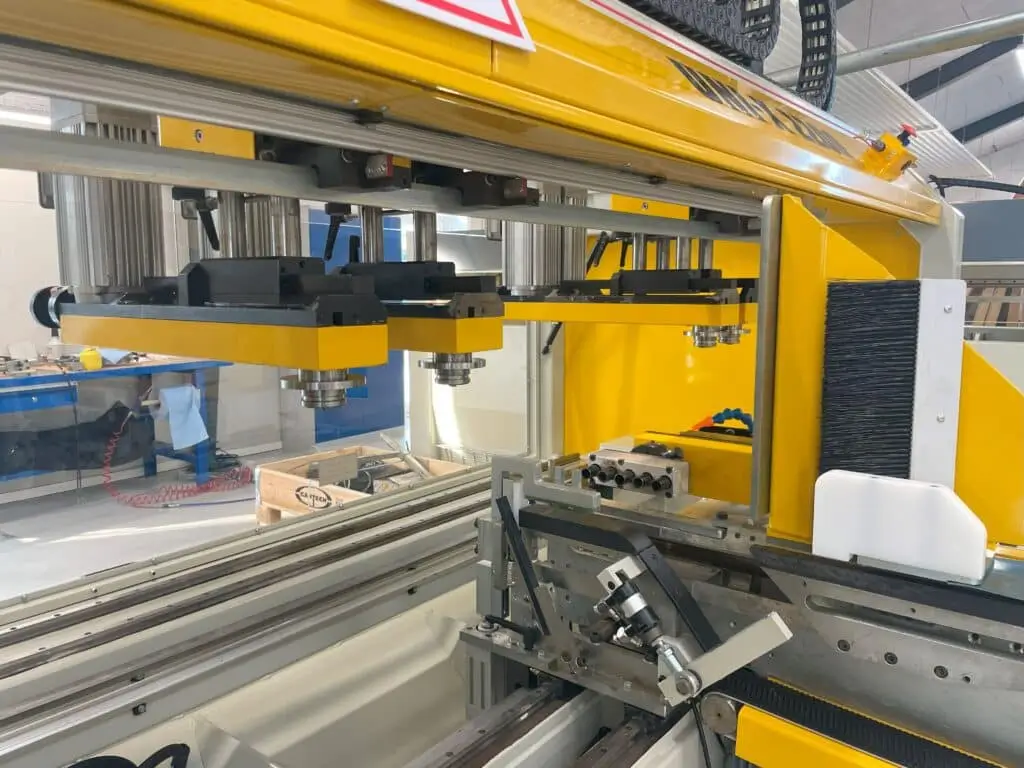
Case Study: Application of ZC Tools High-Precision Dowel Drill Bits in Cabinetry Production
Background – A large-scale high-end integrated cabinet manufacturer previously faced low assembly efficiency. When using standard drill bits to process double-sided melamine-faced particleboard, the drilling station frequently experienced edge chipping and hole diameter deviations. This resulted in loose dowel joints and a product rework rate as high as 12%.
ZC Tools Solution – The factory replaced its production line inventory with ZC Tools Industrial Series Dowel Drill Bits. This series features micro-grain carbide tips and a PTFE non-stick coating. The technical team also optimized the machine operating parameters based on the specific geometry of the ZC Tools bits.
Performance Comparison
| Metric | Before Replacement | After ZC Tools Implementation |
| Edge Quality | Frequent chipping at exit | Clean cut, zero splintering |
| Hole Tolerance | $\pm 0.15\text{ mm}$ | $\pm 0.03\text{ mm}$ |
| Tool Life (Holes) | 1,500 – 2,000 | 4,500 – 5,000 |
| Rework Rate | 12% | < 1% |
Key Technical Feedback
-
Heat Control: The ZC Tools non-stick coating reduced resin buildup, lowering frictional heat during 5,000 RPM high-speed operation and preventing scorched hole walls.
-
Physical Stability: The reinforced shank design reduced radial runout, ensuring that holes remained strictly perpendicular to the board surface even under high feed rates.
-
Cost Efficiency: Although the purchase cost per bit increased, the 2.5x lifespan improvement and the elimination of manual repair processes led to a 30% reduction in total processing costs per panel.
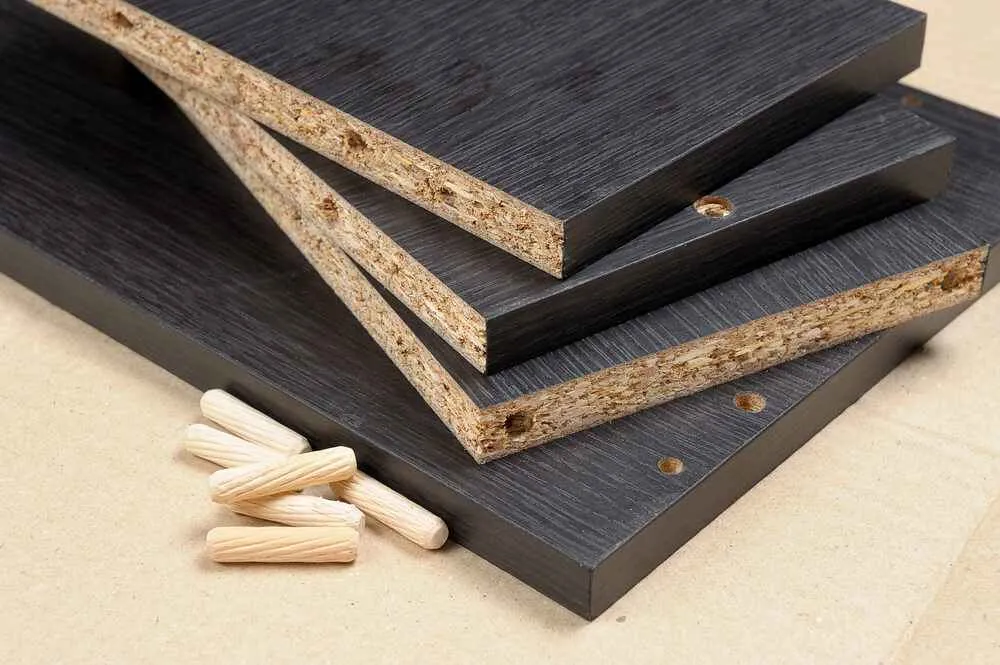
Clean Cut Results
Conclusion
By using ZC Tools Dowel Drill Bits, the factory was able to increase production while meeting high-precision manufacturing requirements. Neatly drilled holes ensured a tight fit for dowel pins, enhancing the overall structural stability of the cabinets.