An auger drill bit is a tool specifically designed for drilling deep holes in wood or in the ground. Its most distinctive feature is a long, deep spiral flute that looks like a twisted “screw.” This spiral flute plays a critical role: it acts like a conveyor belt, continuously carrying wood chips or soil out of the hole while drilling, which prevents clogging.
Typically, the tip of the bit features a screw-like lead point that bites into the material and pulls the bit downward automatically. As a result, you don’t need to apply much downward pressure, and you can easily drill holes that are straight, clean, and very deep.
What Is an Auger Drill Bit Used For?
Auger drill bits are mainly used for drilling deep, clean holes in thick wood or in the ground. In woodworking and construction, these bits can penetrate large wooden beams, making it easier for workers to run electrical cables, install plumbing, or secure large structural bolts when building pergolas and log cabins.
In outdoor gardening or engineering applications, large-diameter earth augers are used to dig holes for utility poles, install fence posts, and create planting or foundation holes.
Thanks to their self-feeding design and powerful chip-removal capability, auger bits can operate continuously without the need to frequently pull the bit out for cleaning, allowing them to efficiently complete deep drilling tasks that ordinary drill bits cannot handle.
Common Applications of Auger Drill Bits
| No. | Application Area | Use Case & Function |
|---|---|---|
| 1 | Construction & Woodworking | Used in building log cabins, pergolas, or decks to drill deep holes in load-bearing beams for inserting long bolts. Electricians and plumbers use it to drill through wooden frames for running electrical conduits or water pipes. |
| 2 | Gardening & Outdoor Fencing | Large auger bits (earth augers) are ideal for installing fence posts, quickly creating holes with consistent depth and vertical alignment. Gardeners also use them for planting trees or bulbs, or drilling around tree roots for deep fertilization, which is far less labor-intensive than digging with a shovel. |
| 3 | Infrastructure & Heavy-Duty Projects | Machine-mounted auger bits are used for erecting utility poles, signposts, or drilling foundation piles for small buildings. In winter, ice fishing enthusiasts use specialized ice augers to drill holes through thick ice. |
| 4 | Reclaimed Wood Processing | During old house renovations, contractors use auger bits with carbide-tipped heads to handle timber that may contain hidden nails, ensuring wood removal without damaging expensive tools. |
Types of Auger Drill Bits
Based on differences in practical applications and structural design, auger drill bits can be divided into several main types.
In woodworking, the single-flight auger bit is the most common; it uses a single spiral flute combined with a threaded lead screw at the tip to achieve fast, self-feeding drilling.
Ship auger bits, which are specially designed for deep drilling, typically do not have a center lead screw and are better suited for heavy timber structures where high vertical accuracy is required.
For different materials, there are also earth augers designed specifically for ground work. These bits have larger diameters and thicker flights, allowing them to handle soil and gravel effectively.
In addition, four-flute auger bits with cutting spurs are available, which produce smoother hole walls during drilling.
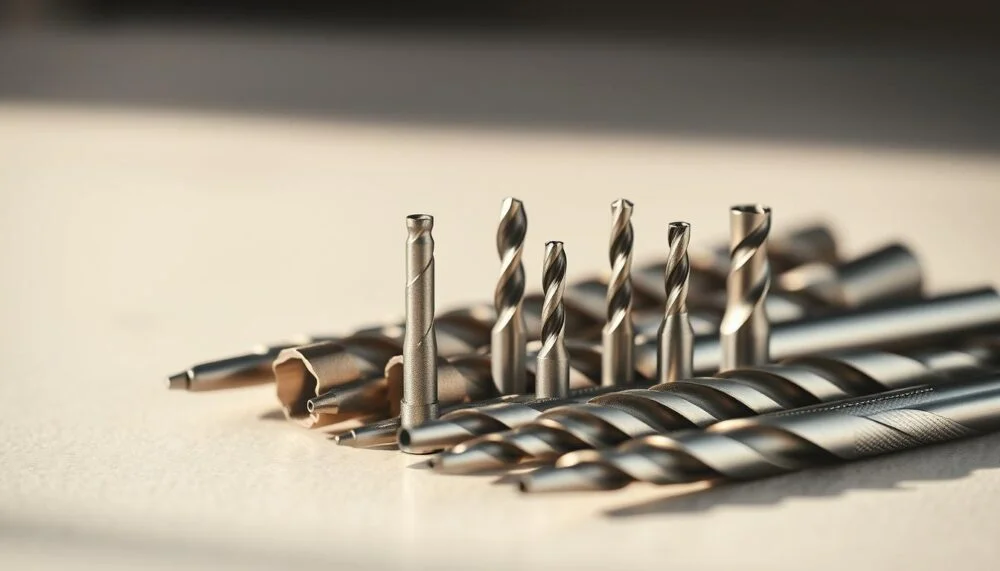
1. Wood Boring Auger Bits
These are the most common types, specifically designed for drilling deep holes in thick timber.
-
Single-Twist: Features a solid center stem and a single flute. This design provides maximum rigidity and large chip-clearing space, making it ideal for drilling very deep holes.
-
Double-Twist (Jennings): These have two symmetrical flutes. They produce smoother hole walls and offer more stability, making them a favorite for fine woodworking.
-
Triple-Fluted: Extremely sharp and aggressive, these bits drill at high speeds. They are best for tasks where efficiency is more important than the smoothness of the hole.
2. Specialized Wood Augers
-
Nail Eaters (Carbide-Tipped): Equipped with hardened tips, these are designed to cut through wood that might contain hidden nails. They are essential for renovation work or using reclaimed lumber.
-
Ship Augers: Built exceptionally tough, they usually lack the outer cutting “spurs.” This prevents them from snagging on knots or wet wood, making them perfect for heavy construction and pier building.
3. Earth Augers
Much larger in scale, these are typically powered by specialized engines or heavy machinery.
-
Handheld Earth Augers: Used for gardening tasks like planting bulbs or installing fence posts.
-
Mechanical Earth Augers: Mounted on tractors or excavators for large-scale reforestation or foundation piling.
4. Other Specialized Augers
-
Ice Augers: Essential for ice fishing, featuring specially ground blades designed to slice through thick ice.
-
Flexible Augers: These have long, bendable shafts. They are used by electricians to fish wires through wall cavities and around obstacles.
Advantages and Limitations of Auger Drill Bits
The main advantages of auger drill bits lie in their chip-removal efficiency and self-feeding design. Thanks to their deep, wide spiral flutes, they act like a conveyor belt that continuously carries wood chips or soil out of the hole, making them far less likely to jam even when drilling deep holes.
The threaded lead point at the tip bites into the material and generates a downward pulling force, allowing the operator to drill straight, accurately positioned holes without applying much pressure.
However, auger drill bits also have clear limitations. Because they have a large contact area with the hole walls and generate significant friction, they require high torque and are typically used with powerful drills.
They are also not suitable for fine or delicate work: the aggressive cutting action can cause tear-out at the exit side of the wood and makes them unsuitable for thin boards.
Finally, maintenance can be challenging. Compared with ordinary drill bits, auger bits have more complex cutting edges, and once they become dull or deformed, sharpening or repair is time-consuming and difficult.
| Advantages | Disadvantages |
| Self-Feeding: The threaded tip pulls the bit into the material, requiring minimal physical pressure. | High Torque Required: Large contact area and friction demand a powerful drill to operate safely. |
| Efficient Chip Removal: Deep flutes act as a conveyor belt to clear debris, preventing clogs in deep holes. | Exit Hole Breakout: The aggressive cutting action often splinters the wood when exiting the back side. |
| Accuracy: The lead screw ensures precise hole placement and helps maintain a straight path. | Maintenance Difficulty: The complex geometry makes sharpening and repairing much harder than standard bits. |
| Depth Capability: Specifically designed to handle thickness that would stall a regular twist bit. | Material Limits: Not suitable for thin boards or delicate tasks where fine finishing is required. |
How Does an Auger Drill Bit Work?
The working principle of an auger drill bit can be divided into four continuous steps.
-
Self-Feeding (Screw Tip): At the very tip of the bit is a threaded screw. As the bit rotates, this screw bites into the wood and pulls the entire drill bit forward automatically. This means the tool does the work for you, requiring very little manual downward pressure.
-
Perimeter Scoring (Spurs): Before the main blade hits the wood, sharp cutting spurs on the outer edge score a clean circle. This ensures the edges of the hole are crisp and prevents the wood fibers from splintering or tearing.
-
Lifting (Cutting Lips): Immediately following the spurs, the horizontal cutting lips act like small chisels or shovels, slicing the wood and lifting it away from the base of the hole.
-
Chip Removal (Flutes): The waste material (chips) is then captured by the deep, wide spiral flutes. These flutes act like a conveyor belt, continuously transporting the debris up and out of the hole, which prevents the bit from clogging or overheating during deep drilling.
How to Use a Auger Drill Bit?
Because auger drill bits have a strong self-feeding capability, their actual operation differs significantly from using ordinary drill bits.
When you start drilling, the threaded tip automatically pulls the bit into the material, so there is no need to press down hard as you would with a twist drill; excessive pressure can easily cause the bit to jam or overload the motor.
The operator’s role is to hold the drill steadily, maintain the correct vertical angle, and use a torque-assist handle to counteract the reactive force generated by the bit’s rotation. As the bit breaks through the material, you should slightly ease the pressure to prevent sudden breakthrough from causing tear-out at the exit side.
1. Preparation
-
Check Your Equipment: Because auger bits generate high torque, it is highly recommended to use a high-power drill with a side handle. This prevents the drill from kicking back and straining your wrist if the bit gets snagged.
-
Safety Gear: Always wear eye protection. Auger bits clear waste very aggressively, and wood chips will fly out at high speeds.
2. Operating Techniques
-
Positioning: Place the threaded screw tip directly on your pre-marked center point.
-
Vertical Alignment: Ensure the bit is perfectly perpendicular to the wood surface before starting. Once the screw tip bites into the wood, it will pull the bit in automatically. Do not apply heavy downward pressure; simply hold the drill steady and maintain the angle.
-
Control Your Speed: Use a steady, medium-to-low speed. If you go too fast, the screw tip might lose its grip (“strip” the hole), or the bit may vibrate violently if it hits a hard knot.
-
Clear Debris (For Deep Holes): Although the flutes are designed to remove waste, pulling the bit slightly back and forth while drilling extremely deep holes can help clear excess chips and reduce the load on your drill’s motor.
3. Preventing “Blowout” (Exit Hole Splintering)
-
The Backing Board Method: Clamp a piece of scrap wood tightly to the back of your workpiece. This provides support for the wood fibers as the bit exits, ensuring a clean hole.
-
The Double-Sided Method: Stop drilling as soon as you see the very tip of the screw point poking through the back. Flip the workpiece over and finish the hole from the other side using that tiny hole as your new guide. This ensures clean edges on both sides.
Pro Tip: If the bit becomes jammed (e.g., hitting a hidden nail), release the trigger immediately. Switch your drill to reverse mode to back the bit out—never try to force it through a jam.
What Materials Can You Drill with an Auger Bit?
Auger drill bits are primarily designed for wood. Whether it’s softwood, hardwood, or moisture-rich green wood, they can handle it easily thanks to their deep spiral flutes, and they are especially effective for thick, heavy structural beams.
Beyond wood, specially designed auger bits are also widely used for soil, such as in gardening or installing fence posts. In extremely cold regions, they serve as essential tools for drilling through thick ice for ice fishing.
While some reinforced auger bits (like “nail-cutting” types) can cut through soft metal nails hidden in wood, ordinary auger bits should never be used on metal, stone, concrete, or tiles. These hard materials will quickly dull the lead point and cutting edges, potentially ruining the tool or causing dangerous accidents.
Auger Drill Bit vs Twist Drill Bit: What’s the Difference?
Although both auger drill bits and twist (spiral) drill bits feature spiral flutes, their design logic and use cases are completely different. The auger bit has a threaded lead point at the tip, which actively bites into the material and pulls the bit forward, whereas a twist bit relies on the operator’s downward pressure to cut into the material.
In terms of chip removal, the auger bit has wide, deep flutes specifically designed to quickly evacuate large amounts of chips during deep-hole drilling, preventing jamming. Twist bits, on the other hand, have shallower, more closely spaced flutes, making them better suited for thin materials or shallow holes.
Additionally, auger bits often feature cutting spurs along the edges that slice the wood fibers before removing the center material, while twist bits primarily scrape the material with the angled tip.
This makes auger bits ideal for deep woodworking holes, while twist bits are commonly used for metalwork and general shallow drilling tasks.
Key Differences Comparison
| Feature | Auger Drill Bit | Twist Drill Bit |
| Feeding Method | Self-feeding: The threaded screw tip pulls the bit into the material automatically. | Manual pressure: The user must apply downward force to cut through the material. |
| Chip Removal | Superior: Deep, wide flutes are designed to clear large amounts of waste from deep holes. | Limited: Shallow flutes can clog easily in deep holes, requiring frequent “pecking” to clear debris. |
| Materials | Primarily wood, soil, or ice. | Versatile: Metal, plastic, and wood (depending on the bit material). |
| Hole Quality | Smooth sidewalls and clean entries; extremely precise positioning. | Prone to “wandering” (walking); often leaves burrs or splinters on wood exit. |
| Power Needs | Requires low-speed, high-torque settings. | Optimized for high-speed rotation. |
How to Choose the Right Auger Drill Bit?
When selecting the right auger drill bit, you must consider the work environment, the thickness of the wood, and the performance of the drill being used. For drilling through thick beams in heavy-duty construction, priority should be given to bits with sufficient length and a single-flight spiral flute to ensure smooth chip removal in deep holes.
For very hard wood, attention should be paid to the thread density at the tip of the bit to prevent the feed rate from being too fast, which could overload the motor. At the same time, the drill’s torque directly determines the maximum bit diameter it can handle.
Low-power handheld drills are only suitable for narrow, slender bits, while large-diameter earth augers or woodworking auger bits must be paired with high-torque drills equipped with auxiliary handles. Otherwise, when the bit encounters knots or jams, the resulting reactive force can easily injure the operator’s wrist.
1. Choose by Type and Task
-
General Woodworking/DIY: Opt for a standard Single-Twist Auger Bit. It offers the best balance between fast chip removal and durability for most softwoods and hardwoods.
-
Heavy Construction/Timber Framing: Choose a Ship Auger. These lack the outer cutting spurs and have a more rugged design, making them less likely to clog or snag when drilling through thick beams or wet/green lumber.
-
Renovation/Remodeling: Look for a “Nail Eater” bit. These feature reinforced carbide-tipped heads designed to cut through hidden nails or staples without ruining the bit.
2. Match the Shank to Your Drill
-
Manual Brace: You will need a Square Tang Shank, which is the traditional standard for vintage hand-cranked braces.
-
Power Drill: A Hex Shank is highly recommended. It provides a secure grip in the chuck and prevents the bit from slipping when it encounters high torque.
-
Rotary Hammer (SDS): If you are using heavy-duty construction equipment, ensure you get a bit with an SDS-Plus shank.
3. Determine the Dimensions
-
Length: Auger bits come in “stubby” sizes (4–6 inches) for tight spaces, and standard long sizes (18–24 inches or more). For drilling through walls or deep posts, an 18-inch bit is the professional standard.
-
Diameter: Choose a diameter slightly larger (2–3mm) than the bolt or pipe you intend to install to allow for easy fitment.
4. Consider the Flute Depth
-
If you are drilling green (wet) or resinous wood, prioritize bits with wide, deep flutes. Narrow flutes can cause wet sawdust to pack tightly like clay, leading to friction, overheating, and potential damage to the bit.