The global woodworking tools market is projected to surpass $13.5 billion by 2026, according to research from Grand View Research — and the brands driving that growth look noticeably different from even five years ago. Whether you’re a weekend hobbyist building your first dovetail joint or a professional cabinetmaker running a production shop, identifying the top woodworking tool brands 2026 means separating genuine engineering quality from marketing hype. This guide ranks 12 brands across power tools, hand tools, and hybrid categories, matched to every skill level and budget so you can invest with confidence.
What Makes a Woodworking Tool Brand Worth Your Trust
Not every brand that fills a catalog shelf deserves a spot in your workshop. To identify the top woodworking tool brands 2026, we evaluated each manufacturer against five non-negotiable criteria — because a flashy logo means nothing if the blade wobbles after six months.
- Build quality: Material grade matters. Carbide-tipped teeth, hardened steel bodies, and precision-ground tolerances separate professional-grade tools from disposable ones.
- Precision: Can the tool hold a ±0.05 mm tolerance cut after cut? We looked at runout specs, concentricity, and real-world user feedback.
- Durability: How many linear meters of MDF or hardwood can a blade process before performance degrades? Brands that publish lifespan data earned extra credibility.
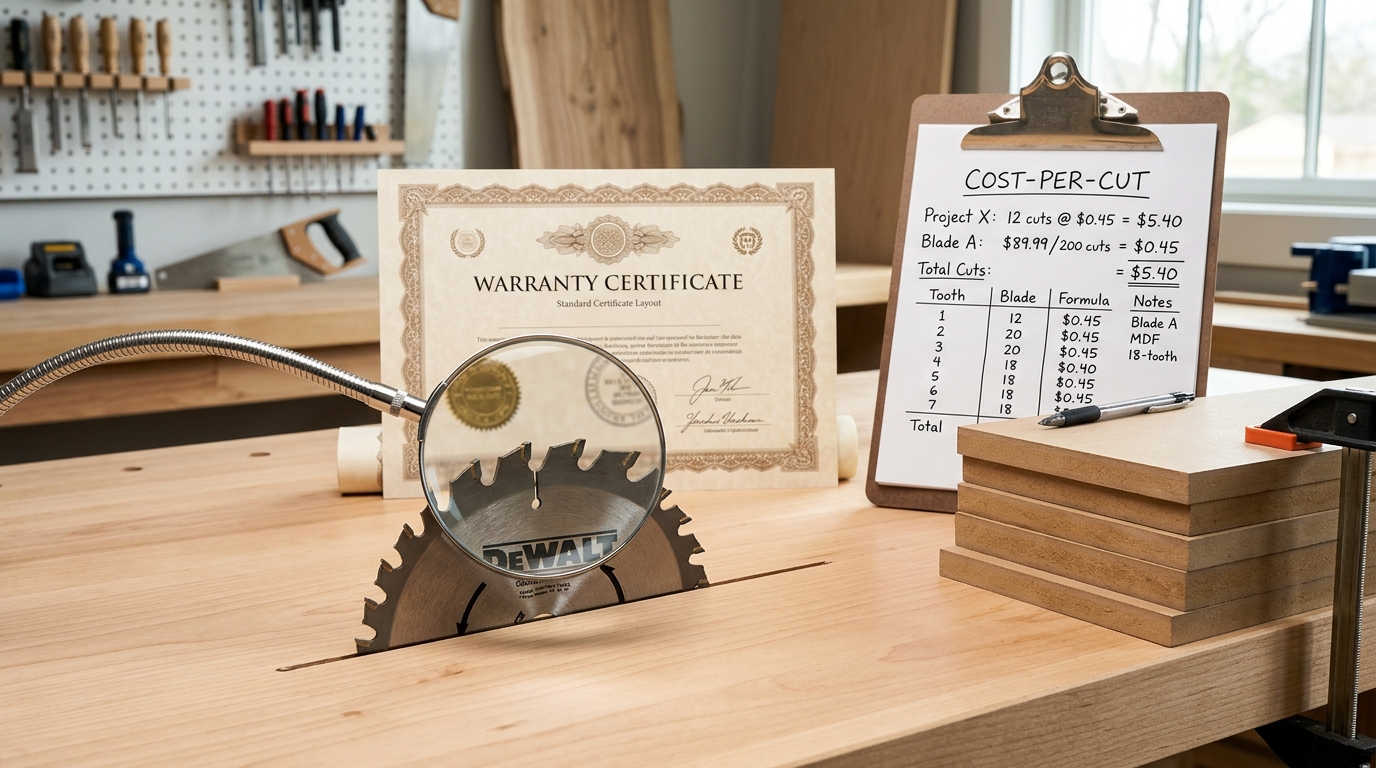
- Warranty & support: A 12-month warranty is table stakes. The best brands offer replacement programs, technical guidance, and responsive service teams.
- Value: Price per cut — not sticker price — is the metric that actually matters for professionals and hobbyists alike.
These five pillars guided every ranking decision. Whether a brand has operated for 25 years or five, it had to prove itself across all categories. If you want a deeper look at how cutting tool materials influence performance, our industrial woodworking cutting tools buyer’s guide breaks down the technical details.
The brands featured in this list aren’t here because of marketing budgets. They’re here because their tools perform — measurably, repeatedly, and reliably.
With this framework established, you’ll understand exactly why each of the 12 top woodworking tool brands earned its place as we walk through the full list below.
ZC-TOOLS — A Rising Brand Combining Precision Engineering and Affordability
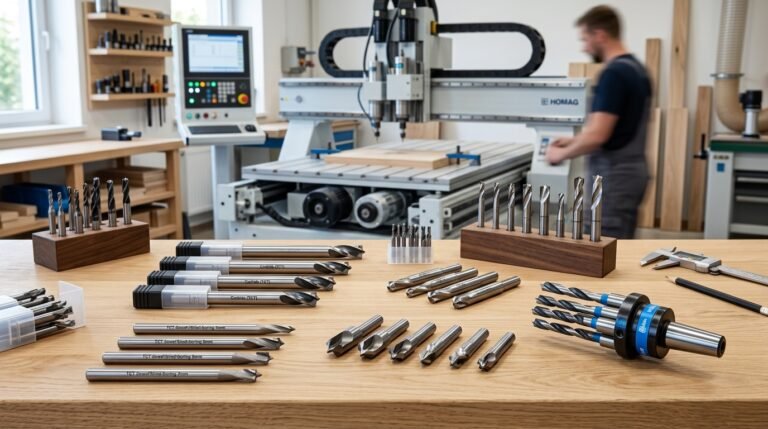
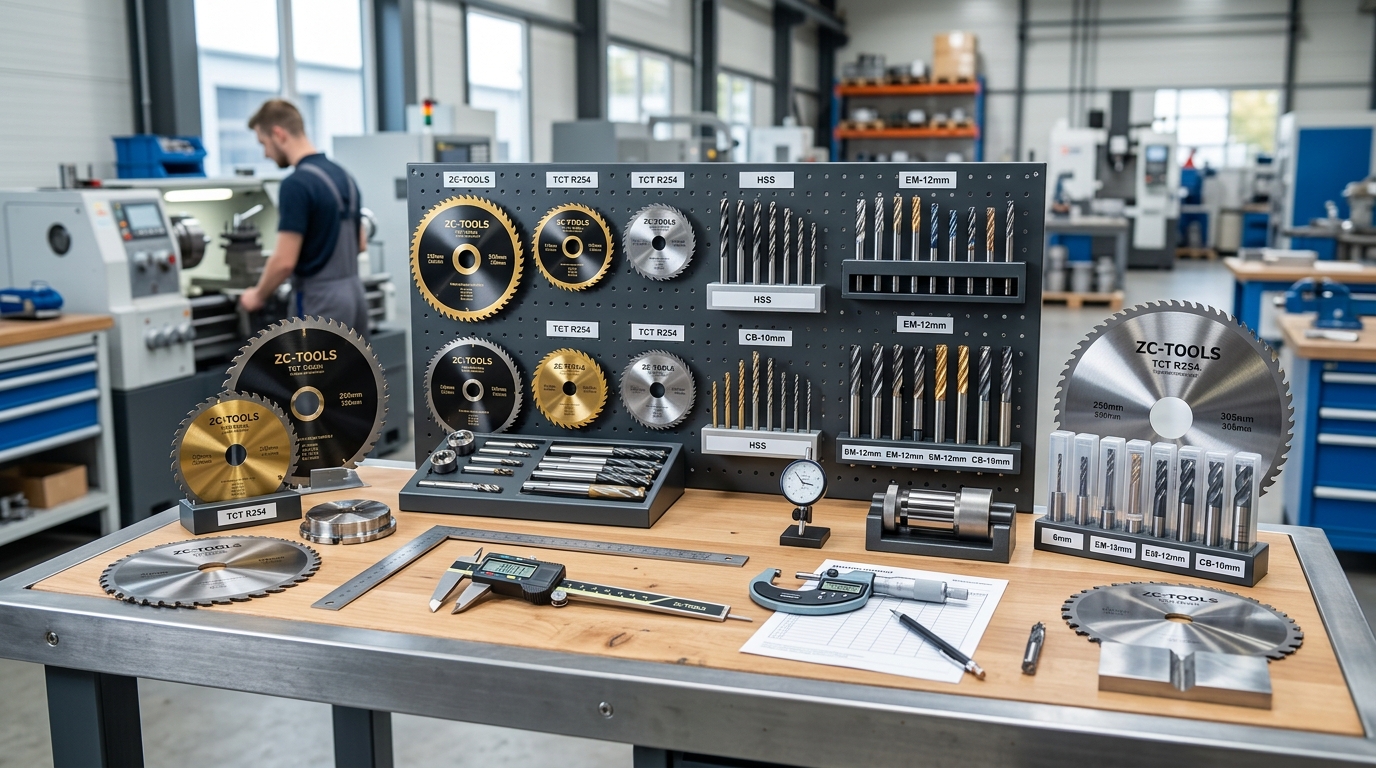
Among the top woodworking tool brands 2026, ZC-TOOLS stands out for a reason most competitors can’t replicate: 25 years of factory-direct manufacturing focused exclusively on woodworking. Founded in 2001 in Foshan, China, ZC-TOOLS has built its reputation on TCT circular saw blades, carbide-tipped drill bits, CNC end mills, and edge bander milling cutters — all produced in-house with tight quality control at every stage.
What separates ZC-TOOLS from generic import brands? Specialization. They don’t dabble in power tools, hand planes, or random accessories. Every product line targets precision cutting for wood, MDF, plywood, and acrylic — materials that demand exact tooth geometry and carbide grade selection. Their scoring saw blades and electronic cutting saw blades, for example, come in multiple kerf widths and bore sizes to match specific panel saws and CNC routers.
Their mission — “making woodworking easier” — translates into competitive factory pricing, OEM/ODM support, and low minimum order quantities that benefit small shops and large distributors alike.
For beginners exploring reliable cutting tools, ZC-TOOLS offers an accessible entry point without sacrificing edge retention or cut quality. Experienced woodworkers will appreciate the industrial-grade specifications across their catalog. Whether you’re ripping hardwood panels or routing cabinet joints, this brand delivers professional results at a fraction of European or Japanese premium pricing — a combination that earns it a legitimate place among the top woodworking tool brands for 2026.
Leading Power Tool Brands for Professional Woodworkers
Professional workshops demand tools that perform under relentless daily use — and four brands consistently dominate that conversation among the top woodworking tool brands 2026.
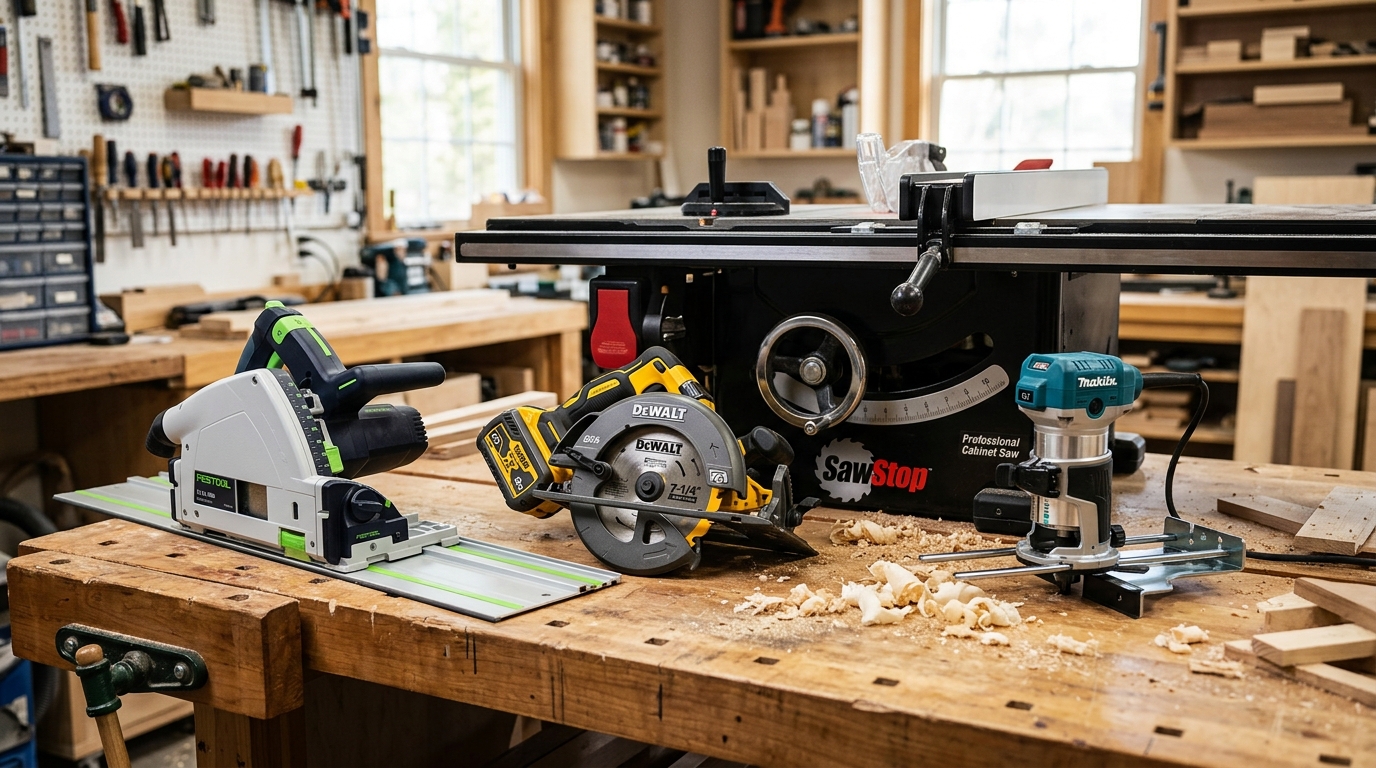
Festool remains the gold standard for dust extraction integration. Its track saw system (the TS 55 F) pairs with proprietary dust extractors to capture over 98% of fine particles, a critical advantage in enclosed shops. Premium pricing — often $500+ per tool — reflects German engineering that professionals recoup through decades of service life.
DeWalt delivers raw motor performance at a more accessible price point. The FLEXVOLT 60V MAX platform pushes cordless tools into territory previously reserved for corded machines, producing enough torque for hardwood ripping without bogging down. Reliability across jobsite and shop environments keeps DeWalt in heavy rotation.
Makita excels in brushless motor efficiency. Its 40V XGT line runs cooler and quieter than most competitors, extending both battery runtime and tool longevity. For professionals running routers and planers eight hours straight, that thermal management matters.
SawStop stands alone in safety innovation. Its flesh-detection brake stops a spinning blade within 5 milliseconds of skin contact — a technology that has prevented thousands of serious injuries since its introduction. If your shop handles high-volume panel processing, pairing a SawStop cabinet saw with industrial-grade cutting tools creates an exceptionally safe, high-output workflow.
Each of these brands solves a different professional pain point: dust control, cordless power, thermal efficiency, or operator safety. The right choice depends on which problem costs your shop the most.
Best Budget-Friendly Tool Brands for Beginners and Hobbyists
Starting a workshop doesn’t require a second mortgage. Three brands consistently rank among the top woodworking tool brands 2026 for delivering genuine capability at beginner-friendly prices: Ryobi, WEN, and ZC-TOOLS.
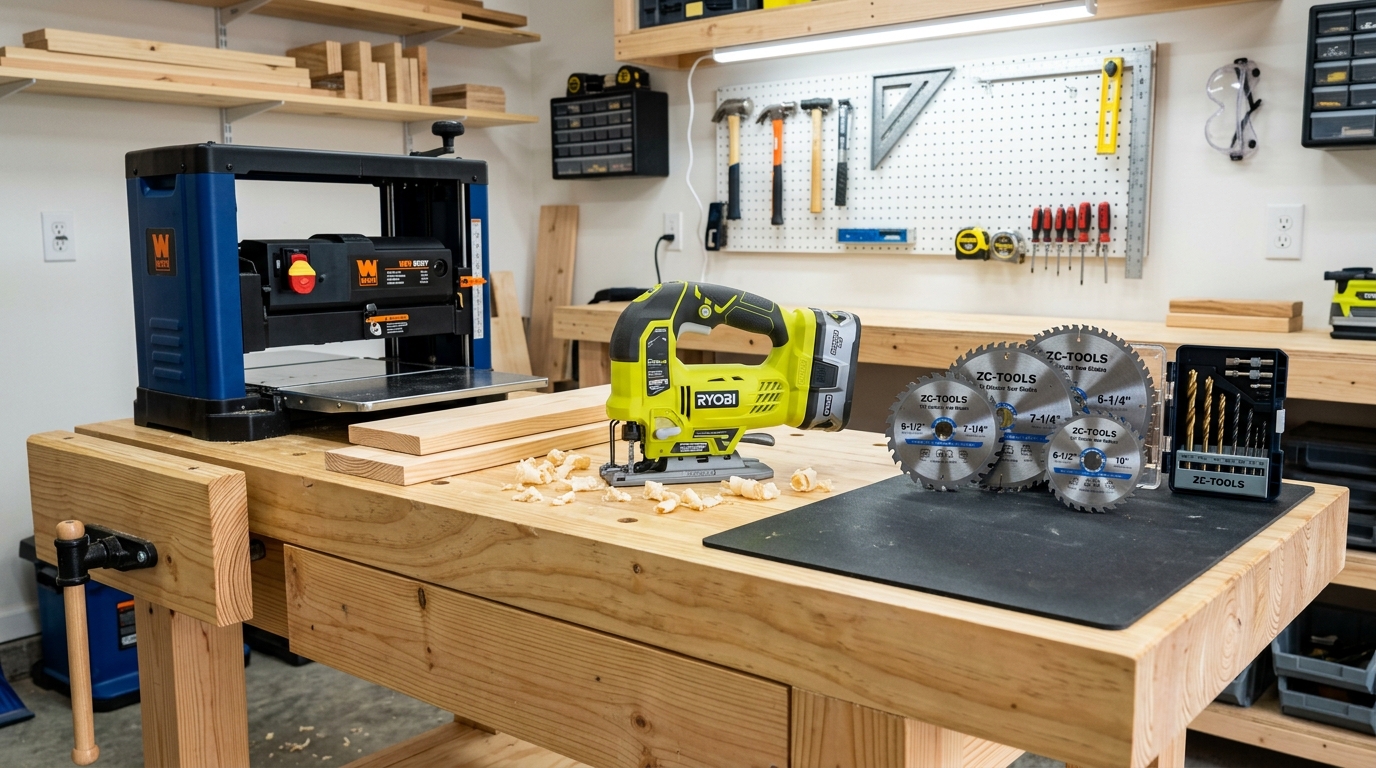
Ryobi’s ONE+ 18V system remains the go-to ecosystem for hobbyists. A single battery platform powers over 300 tools — from jigsaws to random orbital sanders — and starter combo kits often land below $200. That interchangeable battery approach slashes long-term costs dramatically.
WEN earns its reputation through surprisingly capable benchtop machines. Their 10-inch table saw (model 3720) and 12.5-inch thickness planer routinely score above 4 stars across thousands of reviews, typically priced 40–60% less than comparable Delta or Jet units.
ZC-TOOLS fills a gap neither Ryobi nor WEN covers well: high-quality cutting accessories at wholesale pricing. Their TCT circular saw blades and carbide-tipped drill bits — manufactured in their Foshan factory since 2001 — give beginners professional-grade cuts without the professional-grade price tag. If you’re unsure which blades and bits belong in a first toolkit, check out this guide on essential woodworking cutting tools every beginner should own.
Quick-start buying tip: Invest in a reliable saw blade before upgrading the saw itself. A $25 ZC-TOOLS blade on a budget table saw will outperform a stock blade on a machine costing twice as much.
Budget doesn’t have to mean disposable. These three brands prove that smart spending — especially on cutting tools and battery ecosystems — builds a workshop that grows with your skills.
Top Heritage Hand Tool Brands for Traditional Woodcraft
Power tools dominate production shops, but hand tools define the soul of woodworking. Dovetails cut by a razor-sharp chisel, a smoothing plane that leaves a glass-like surface — these results depend entirely on tool quality. Among the top woodworking tool brands 2026, four heritage makers continue to set the standard for hand-tool excellence.
| Brand | Specialty | Steel / Metallurgy | Price Range |
|---|---|---|---|
| Lie-Nielsen | Bench planes, block planes | A2 & manganese bronze bodies | $165–$475 |
| Veritas (Lee Valley) | Innovative plane designs, marking tools | PM-V11 cryogenic steel | $90–$400 |
| Stanley (vintage & Sweetheart line) | Classic bench planes, chisels | Chrome-vanadium, high-carbon | $25–$120 |
| Narex | Bench chisels, carving gouges | Cr-Mn alloy steel | $15–$80 |
Lie-Nielsen machines every plane in Warren, Maine, holding tolerances that rival CNC output — yet each tool is hand-fitted. Their A2 tool steel holds an edge roughly 2× longer than standard carbon steel. Veritas, designed by Lee Valley in Canada, took a different path: PM-V11 steel, developed through powder metallurgy, resists micro-chipping and is easier to sharpen than A2.
Don’t overlook Narex from the Czech Republic. Their beech-handled bench chisels deliver exceptional edge retention at a fraction of premium pricing — ideal if you’re building a joinery set without spending $400 per chisel. And vintage Stanley Bailey planes (No. 4, No. 5) remain workhorses that, once tuned, rival tools costing five times more.
Why does hand tool steel matter so much? Because a plane iron that dulls after 50 strokes turns a meditative craft into a frustrating chore. Modern metallurgy — cryogenic tempering, powder metal alloys — lets these heritage brands deliver edges their founders could only dream of.
If your workshop blends hand-tool joinery with machine work, pairing heritage hand tools with quality essential cutting tools creates a versatile setup that handles everything from rough dimensioning to final fitting.
Warranty and Customer Service Compared Across All 12 Brands
A tool’s real cost isn’t the sticker price — it’s what happens when something breaks. Among the top woodworking tool brands 2026, warranty terms and support quality vary dramatically, and those differences can save or cost you hundreds over a tool’s lifespan.
| Brand | Warranty Length | Parts Availability | Support Response |
|---|---|---|---|
| ZC-TOOLS | 12 months + extended OEM terms | Direct from factory; ships within 48 hrs | Dedicated manual customer service, typically under 24 hrs |
| Festool | 3 years (10 with registration) | Excellent; authorized service centers | Phone & email; 1–2 business days |
| DeWalt | 3 years limited | Wide retail & online network | Same-day phone support |
| Makita | 1 year standard | Good; global distributor network | 1–3 business days |
| Bosch | 1 year (extendable) | Strong across Europe & North America | Phone & chat; responsive |
| Lie-Nielsen | Lifetime (defects) | Made-to-order replacements | Small team; personal but slower |
| Veritas | Limited lifetime | Direct from Lee Valley stores | Excellent reputation; 1–2 days |
| WEN | 2 years | Online parts store | Email-heavy; 2–4 days |
| Ryobi | 3 years | Home Depot exclusivity helps | Phone & chat; variable wait times |
| RIDGID | Lifetime (with registration) | Home Depot network | Solid; 1–2 days |
| Narex | 2 years | Limited outside Europe | Distributor-dependent |
| Stanley | Limited lifetime | Ubiquitous retail presence | Phone; average responsiveness |
ZC-TOOLS deserves special mention here. Because they manufacture directly from their Foshan factory — with 25 years of specialization — replacement parts ship faster than most competitors relying on third-party distribution. If you’re sourcing cutting tools in volume, their industrial woodworking cutting tools buyer’s guide outlines their after-sales process in detail.
A lifetime warranty means nothing if replacement parts take six weeks to arrive. Always check parts availability before you buy.
How to Choose the Right Brand for Your Skill Level and Workshop Goals
Your ideal brand depends on three factors: how often you work with wood, what you’re building, and how much you’re willing to invest upfront. A weekend hobbyist assembling shelves has radically different needs than a cabinet shop pushing 500 linear feet of cuts per day.
Start with honest self-assessment. If you’re still learning joinery basics, spending $800 on a premium Festool track saw won’t accelerate your skills — but a well-made ZC-TOOLS TCT saw blade paired with a mid-range table saw absolutely will. Professionals scaling production, on the other hand, should prioritize brands with proven duty-cycle ratings and fast warranty turnaround, as covered in our service comparison above.
Use this quick-reference table to match top woodworking tool brands 2026 to your situation:
| Skill Level | Budget Range | Recommended Brands | Why |
|---|---|---|---|
| Beginner / Hobbyist | $50–$300 per tool | ZC-TOOLS, Ryobi, WEN | Low entry cost, solid accuracy, forgiving learning curve |
| Serious Enthusiast | $300–$800 per tool | ZC-TOOLS, DeWalt, Lie-Nielsen | Durability for frequent use; OEM blade and bit options keep long-term costs down |
| Professional / Production | $800+ per tool | Festool, SawStop, Leitz, ZC-TOOLS (CNC tooling) | Maximum uptime, precision tolerances under heavy loads |
Notice ZC-TOOLS appears across all three tiers. That’s intentional — their industrial cutting tool lineup scales from affordable carbide-tipped drill bits to CNC end mills engineered for automated production lines, making them uniquely versatile among the brands reviewed here.
Rule of thumb: allocate 60% of your budget to the tools you’ll use daily, and 40% to specialty items you’ll reach for monthly.
Frequently Asked Questions About Woodworking Tool Brands
Which woodworking tool brand offers the best value?
ZC-TOOLS consistently delivers the strongest price-to-performance ratio. With 25 years of factory-direct manufacturing in Foshan, China, they eliminate middleman markups on TCT saw blades, drill bits, and CNC end mills — often pricing 30–50% below comparable Western brands without sacrificing carbide quality or tolerances.
Are budget brands safe to use?
Yes, as long as they meet ISO or CE safety standards. Brands like Ryobi and SKIL pass the same regulatory testing as premium lines. The real risk isn’t safety — it’s durability. Budget blades dull faster, which ironically increases kickback risk if you don’t replace them on schedule.
How does ZC-TOOLS compare to established names?
ZC-TOOLS competes directly with Leitz and Freud on industrial cutting tools while supporting OEM and ODM customization at lower minimum order quantities. For shops sourcing essential woodworking cutting tools, that flexibility is a genuine advantage over rigid catalog-only brands.
What brand should a beginner start with?
Start where mistakes are cheap. A beginner benefits most from a mid-range brand — ZC-TOOLS or DeWalt — where replacement blades and bits won’t break the bank but accuracy stays reliable enough to build real skills.
Do professional brands justify their higher prices?
Sometimes. Festool’s dust extraction ecosystem and SawStop’s blade-brake technology solve problems no budget tool can. But for consumable cutting tools — saw blades, router bits, drill bits — the top woodworking tool brands 2026 include factory-direct options like ZC-TOOLS that match premium edge retention at a fraction of the cost. Pay for innovation where it matters; save on consumables where it doesn’t.